


Large Injection Molding Machines
Large Injection Molding Machines Manufacturer
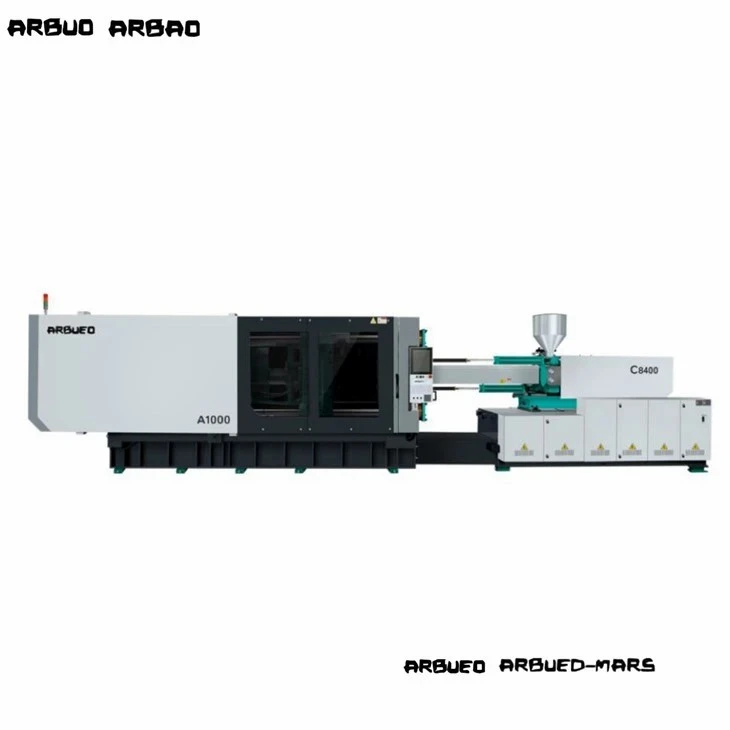
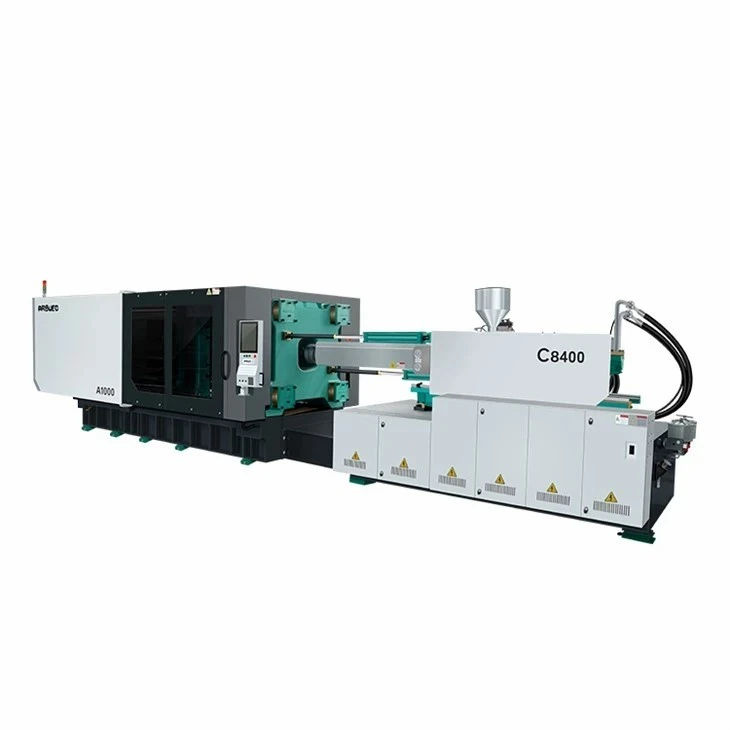
Large injection molding machines (clamping force >= 450 tons / 4,500 kN) process bulk thermoplastic components across automotive, packaging, logistics, and appliance sectors. Operating heavy molds requires structural stiffness, precise platen parallelism, stable platen movement, and energy-efficient hydraulic or hybrid drive architectures.
This guide provides technical configurations, platen dimensions, tie-bar spacing, and shot capacities across our heavy-tonnage machinery platforms. It assists toolmakers, manufacturing engineers, and procurement directors in matching mold dimensions, resin flow requirements, and cycle time targets with machine specifications.


Large Injection Molding Machine Overview
Heavy-tonnage injection molding systems utilize either two-platen hydraulic/servo-electric hybrid structures or optimized five-point double-toggle mechanical clamping mechanisms.
Clamping Architecture
Two-Platen Systems: Utilize direct hydraulic traversing cylinders for high-speed platen movement, combined with four tie-bar locking nuts and short-stroke hydraulic tonnage cylinders. This design eliminates toggle link wear, reduces machine footprint by 20% to 30% compared to three-platen setups, and provides unobstructed rear access for automated parts extraction.
Five-Point Toggle Systems: Utilize balanced mechanical toggle links driven by servo-hydraulic units. These systems deliver fast platen movement, natural kinetic deceleration before mold touch, and energy-efficient lockup during cooling phases.
Injection Architecture
Double-cylinder balanced injection units eliminate tilt torque on linear guides during high-pressure injection (up to 2,200 bar).
Nitrided or bimetallic screw and barrel assemblies handle glass-fiber reinforced resins (PP-GF30, PA66-GF30), structural alloys, and recycled polymers.
Servo-electric or variable-displacement hydraulic pump systems deliver precise closed-loop speed and pressure control, maintaining injection repeatability within +/- 0.1%.
Machine Range
Our large-tonnage equipment is categorized into four distinct structural lines based on clamping force, drive system, and target applications:
|
Series |
Clamping Force Range |
Clamp System |
Drive Type |
Primary Technical Focus |
|
HT-T Series |
450T - 1,000T |
5-Point Toggle |
Servo-Hydraulic |
General large parts, deep-draw containers, industrial crates. |
|
HD-TP Series |
600T - 3,200T |
Two-Platen |
Servo-Hydraulic / Hybrid |
Automotive bumpers, dashboards, large pallet boxes, tight footprint installations. |
|
HS-PET Series |
450T - 800T |
Heavy-Duty Toggle |
High-Flow Servo |
PET preform production (up to 128 cavities), specialized high-torque plasticizing units. |
|
HE-Electric Series |
450T - 900T |
Servo-Electric |
Full Electric / Hybrid |
Cleanroom medical packaging, optical light guides, ultra-precise thin-wall automotive parts. |
Product List
HD-600TP Two-Platen Injection Molding Machine
Clamping Force: 6,000 kN (600 Ton)
Tie-Bar Clearance (H x V): 920 x 850 mm
Max. Shot Weight (PS): 2,850 g
Screw Diameter: 80 / 90 / 100 mm
Key Feature: Compact footprint design with direct-lock tie-bar mechanism; includes proportional closed-loop control for core-pulling sequences.
HT-800T Five-Point Toggle Machine
Clamping Force: 8,000 kN (800 Ton)
Tie-Bar Clearance (H x V): 1,060 x 980 mm
Max. Shot Weight (PS): 4,320 g
Screw Diameter: 95 / 105 / 115 mm
Key Feature: High-rigidity box-type platens engineered via Finite Element Analysis (FEA) to minimize platen deflection under high tonnage.
HD-1200TP Two-Platen Machine
Clamping Force: 12,000 kN (1,200 Ton)
Tie-Bar Clearance (H x V): 1,320 x 1,200 mm
Max. Shot Weight (PS): 7,800 g
Screw Diameter: 115 / 125 / 135 mm
Key Feature: Automatic tie-bar retraction (top non-operator side) for simplified side-loading of large automotive tooling.
HD-1800TP Automotive-Grade Two-Platen Machine
Clamping Force: 18,000 kN (1,800 Ton)
Tie-Bar Clearance (H x V): 1,600 x 1,450 mm
Max. Shot Weight (PS): 14,200 g
Screw Diameter: 140 / 155 / 170 mm
Key Feature: Multi-stage injection profiling with synchronized sequential valve gate control (up to 16 pneumatic/hydraulic zones).
HD-2500TP Heavy Industrial Machine
Clamping Force: 25,000 kN (2,500 Ton)
Tie-Bar Clearance (H x V): 1,900 x 1,700 mm
Max. Shot Weight (PS): 22,500 g
Screw Diameter: 165 / 180 / 200 mm
Key Feature: Dual plasticizing cylinders with electric screw drive option; capable of continuous high-volume polymer melting for logistics waste containers and pallets.
HD-3200TP Ultra-Large Structural Machine
Clamping Force: 32,000 kN (3,200 Ton)
Tie-Bar Clearance (H x V): 2,200 x 1,950 mm
Max. Shot Weight (PS): 35,000 g
Screw Diameter: 190 / 210 / 230 mm
Key Feature: Reinforced platen structure with active platen tilt compensation, engineered for multi-cavity automotive exterior moldings and civil utility chambers.
Key Technical Features
Clamping Structure Stiffness & Finite Element Analysis (FEA)
Platen deformation under maximum tonnage causes mold flash, partition line wear, and non-uniform wall thickness.
Platens feature box-frame reinforcement engineered via FEA to distribute clamping force evenly across the entire mold mounting face.
Platen parallelism remains within <= 0.08 mm/m under 100% clamping loads.
Chrome-plated 42CrMo high-tensile steel tie-bars undergo induction hardening and ultrasonic non-destructive testing (NDT) to prevent fatigue cracking under cyclic load stresses.
Servo-Hydraulic Drive Architecture
Driven by permanent magnet synchronous servo motors coupled with internal gear pumps.
Response time for dynamic pressure and speed adjustment: <= 30 ms.
Energy consumption is reduced by 30% to 55% compared to traditional variable-displacement pump machines, as motor speed drops to near zero during holding and cooling phases.
Plasticizing System & Wear Resistance
Standard Barrel & Screw: 38CrMoAlA steel, ion nitrided to a depth of 0.5 - 0.8 mm (hardness >= 950 HV).
Bimetallic Option (Abrasive/Corrosive Resins): Nickel-based alloy lining within the barrel, paired with a tungsten carbide spray-welded screw flight coating (hardness 60 - 65 HRC) for up to 30% glass fiber loading.
Barrier screw geometry with dispersive and distributive mixing elements ensures melt thermal homogeneity within +/- 1.5 deg C.
Precision Hydraulic Control & Automation Interface
Proportional valves control mold opening/closing deceleration, core pulls, and ejection sequences.
EtherCAT/CANbus industrial communication networks interface directly with linear transducers (position resolution 0.01 mm).
Standard Euromap 63 / Euromap 73 interfaces allow plug-and-play integration with top-entry robots, side-entry sprue pickers, magnetic mold clamping systems, and sequential hot runner controllers.
Clamping Force, Mold Size & Shot Capacity
Matching a mold to the correct machine requires evaluating projected area, mold height, clearance between tie-bars, and resin density.
Clamping Force (kN) = [ Projected Area of Part & Runner System (cm2) x Average Cavity Pressure (bar) ] / 100
Polymers with high viscosity (e.g., PC, PMMA, PA-GF): Require average cavity pressures of 400 - 700 bar.
Polymers with low viscosity (e.g., PP, PE, PS): Require average cavity pressures of 250 - 450 bar.
Clearance Between Tie-Bars (H x V): Horizontal and vertical distances between tie-bars must exceed the outer plate dimensions of the mold unless the machine features top tie-bar pullout capabilities.
Mold Height Range (Min/Max): Total stack height of the mold must fall strictly within the machine's daylight capability:
Max Daylight = Max Mold Height + Clamping Stroke
Ejector Stroke & Force: Ensure hydraulic ejector pins align with mold ejector plates and deliver sufficient force to clear deep-draw parts.
To maintain thermal stability and avoid polymer degradation:
Minimum Shot Mass: Should exceed 20% of total theoretical shot capacity.
Maximum Shot Mass: Should not exceed 80% of total theoretical shot capacity (calculated in PS equivalent density rho = 1.05 g/cm3).
Resin Density Adjustment Factor:
Actual Shot Capacity (Resin) = PS Shot Capacity x ( Melt Density of Target Resin / Melt Density of PS )
Technical Specifications
|
Parameter |
Unit |
HD-600TP |
HT-800T |
HD-1200TP |
HD-1800TP |
HD-2500TP |
HD-3200TP |
|
Clamping Force |
kN |
6,000 |
8,000 |
12,000 |
18,000 |
25,000 |
32,000 |
|
Opening Stroke |
mm |
950 |
1,050 |
1,350 |
1,650 |
1,950 |
2,250 |
|
Distance Between Tie-Bars (H x V) |
mm |
920 x 850 |
1,060 x 980 |
1,320 x 1,200 |
1,600 x 1,450 |
1,900 x 1,700 |
2,200 x 1,950 |
|
Max. Daylight |
mm |
1,800 |
2,050 |
2,550 |
3,050 |
3,550 |
4,050 |
|
Min. / Max. Mold Height |
mm |
400 / 850 |
450 / 1,000 |
500 / 1,200 |
600 / 1,400 |
700 / 1,600 |
800 / 1,800 |
|
Screw Diameter (B-Option) |
mm |
90 |
105 |
125 |
155 |
180 |
210 |
|
L/D Ratio (B-Option) |
L/D |
22:1 |
22:1 |
23:1 |
23:1 |
24:1 |
24:1 |
|
Injection Volume |
cm3 |
2,860 |
4,110 |
7,420 |
13,580 |
21,500 |
33,350 |
|
Shot Weight (PS) |
g |
2,600 |
3,745 |
6,750 |
12,350 |
19,560 |
30,350 |
|
Injection Pressure (B-Screw) |
bar |
1,850 |
1,780 |
1,820 |
1,750 |
1,700 |
1,650 |
|
Max. Screw Speed |
rpm |
160 |
140 |
120 |
105 |
90 |
75 |
|
Ejector Force |
kN |
160 |
200 |
280 |
400 |
550 |
700 |
|
Ejector Stroke |
mm |
250 |
300 |
350 |
400 |
450 |
500 |
|
Oil Tank Capacity |
L |
900 |
1,200 |
1,800 |
2,600 |
3,500 |
4,800 |
How to Select
Selecting heavy-tonnage injection equipment requires evaluating mechanical, thermal, and plant infrastructure requirements. Follow this engineering verification sequence:
Calculate Minimum Tonnage Requirements:
Estimate total projected surface area (including cold runners) and multiply by material-specific peak cavity pressure.
Check Physical Tooling Dimensions:
Verify outer mold dimensions pass through tie-bar clearance. Ensure stack height fits between Min/Max platen shut-height limits.
Evaluate Resin & Plasticizing Demands:
Select standard vs. bimetallic screw based on abrasive additives (GF/Talc). Match L/D ratio and torque requirements to ensure proper melt homogeny without polymer chain shearing.
Audit Factory Utilities & Floor Capabilities:
Verify transformer power capacity for peak motor and heating loads. Assess overhead crane lifting capacity against max mold/machine component weight, and inspect floor slab thickness to support heavy static loads.
Define Core-Pull & Automation Interfaces:
Determine required hydraulic core-pull circuits and select Euromap interface protocols (Euromap 63, 73, or 84) for robotic automation.
Applications
Automotive Sector
Parts: Front and rear bumpers, door trim modules, instrument panels, wheel arch liners.
Resins: PP + EPDM-TD20, PC/ABS, ABS, PA66 + 30% GF.
Technical Requirement: Low clamp deflection to prevent flash across wide parting lines, sequential valve gate integration for weld-line control, core-back function for microcellular foam molding (Mucell process).
Industrial Packaging & Logistics
Parts: Heavy-duty returnable shipping crates, agricultural boxes, 1,000-liter foldable containers, plastic pallets.
Resins: High-Density Polyethylene (HDPE), Polypropylene Impact Copolymers (PP-C).
Technical Requirement: High plasticizing capacity (kg/h) for continuous fast-cycling operation; multi-stage core-pulling sequences for complex slide cores.
Consumer Appliances & Environmental Utilities
Parts: Washing machine outer tubs, air conditioner main frames, 120L/240L municipal waste bins, cable access chambers.
Resins: HDPE, PP, Structural ABS.
Technical Requirement: Structural rigidity to withstand long cooling cycles without thermal deformation; multi-point hydraulic ejection systems.
Manufacturing, Installation & Commissioning
Plant Precision Manufacturing
Heavy structures undergo stress-relief annealing in digital heat-treatment furnaces prior to machining.
Platen surfaces and tie-bar bores are machined in a single setup on large CNC floor-type boring mills to preserve geometric tolerances.
Quality Control & Factory Acceptance Testing (FAT)
Every machine undergoes a 24-hour dry-run testing cycle at maximum operating speed prior to dispatch.
Laser interferometers verify platen alignment and motion repeatability. Hydraulic lines are pressure-tested at 1.5 times working pressure to prevent leaks.
Logistics, Installation & Site Acceptance Testing (SAT)
Logistics: Shipped as modular sub-assemblies (clamping unit, injection unit, hydraulic power pack) on flat-rack and open-top containers.
Installation: Precision leveling using heavy-duty wedge mounts on reinforced industrial concrete floors (minimum concrete thickness: 250 - 300 mm).
Commissioning: On-site verification includes hydraulic oil cleanliness flushing (ISO 4406 standard 16/14/11), calibration of heating zones, alignment of tie-bar locks, and full integration testing with customer mold tooling and automation.
Customization & OEM
We offer tailored mechanical, hydraulic, and software modifications to integrate our large machines into specialized manufacturing cells:
Extended Daylight & Increased Mold Height: Platen extensions and elongated tie-bars for deep-draw molding applications (e.g., trash cans, deep tanks).
Tie-Bar Pulling Systems: Hydraulic tie-bar extraction on top or side positions allows horizontal mold loading where overhead crane clearance is restricted.
Specialized Plasticizing Units:
High-wear bimetallic barrels for handling up to 50% glass fiber or mineral filler loading.
Corrosion-resistant screws (Inconel or chrome-plated steel) for processing PVC and flame-retardant polymers.
Vented barrels for processing hygroscopic resins without pre-drying.
Multi-Material / Co-Injection Upgrades: Modular secondary injection units (piggyback, L-shape, or vertical layout) with integrated rotary table control for multi-shot molding.
Related Machines
To support specialized processing requirements, we offer complementary machine platforms:
All-Electric Injection Molding Machines (100T - 450T):
Ultra-precise, cleanroom-ready systems designed for medical and optical components with zero oil contamination risk.
Multi-Color / Multi-Component Machines (150T - 1,600T):
Integrated rotary tables or index plates for multi-material automotive lighting and soft-grip seals.
PET Preform Systems (250T - 800T):
Purpose-built high-speed platforms equipped with high-torque plasticizing units, chilled platen technology, and dedicated post-cooling automation.
Auxiliary Equipment & Automation:
Servo robots, centralized material conveying systems, gravimetric blenders, and mold temperature controllers calibrated for high-volume resin throughput.
FAQ
We're professional large injection molding machines manufacturers and suppliers in China, specialized in providing high quality customized service. We warmly welcome you to wholesale large injection molding machines for sale here from our factory. For price consultation, contact us.