


Hybrid Injection Molding Machines
High-Performance Hybrid Injection Molding Machines: Precision Servo-Electric & Hydraulic Power Integration
Industrial plastic molding demands a strict balance between dynamic force, axis synchronization, speed, and energy conservation. Standard hydraulic units often hit thermal limits during fast cycles, while all-electric systems can lack clamping tonnage for deep-draw parts or high-viscosity resins.
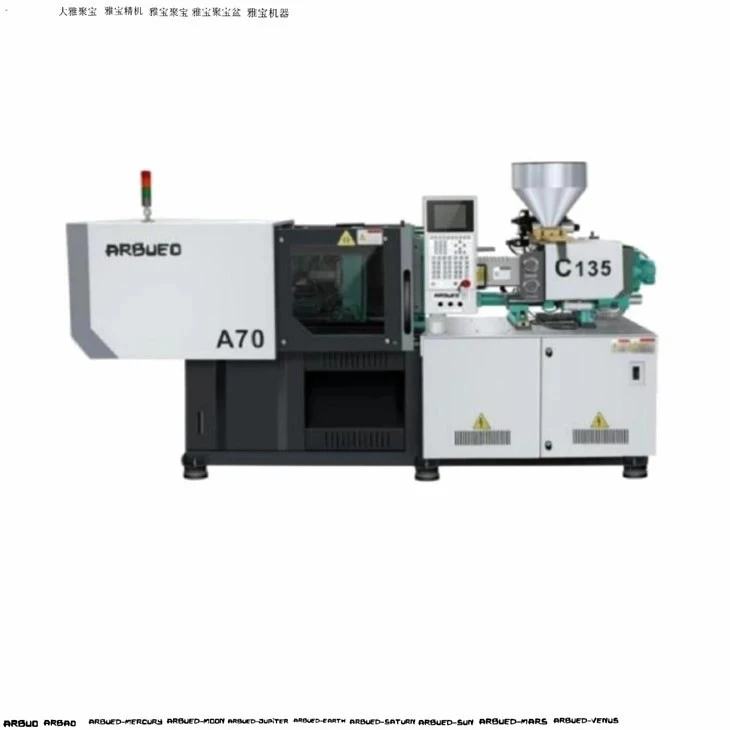
Hybrid injection molding machines resolve this tradeoff by combining electric servo drives for plasticizing and clamping movements with high-pressure hydraulic accumulators for injection and core pulling. This architecture delivers stable dry cycles, dynamic injection speeds up to 800 mm/s, position repeatability down to ±0.01 mm, and energy savings up to 40% compared to conventional hydraulic presses.


Hybrid Injection Molding Machine Overview
Hybrid machines separate high-duty continuous functions from high-force intermittent operations:
Servo-Electric Drives: Control screw rotation (plasticizing), mold open/close, and ejector axes. They enable independent, cycle-overlapping movements (such as plasticizing during mold opening) without hydraulic cross-talk.
Hydraulic Systems: Dedicated to localized, high-tonnage clamping locking, dynamic injection boost, and side-core actuation.
Hybrid Machine Motion Architecture
Servo-Electric Axes
Screw Rotation & Plasticizing
Platen Movement (Open / Close)
Ejector Stroke Control
Hydraulic Power Unit
Accumulator-Assisted Injection
High-Pressure Clamping Lock
Core Pulling & Side Slides
Synchronized CNC Control
Real-Time Axis Tracking
Closed-Loop Pressure & Velocity Integration
By removing hydraulic throttling during continuous movement, fluid heating drops significantly. This allows smaller oil reservoirs, extends hydraulic seal lifespan, and delivers high positional repeatability across multi-shift production runs.
Machine Configurations
Different production environments require specific platen layouts and clamping architectures:
|
Configuration |
Clamping Tonnage |
Core Advantage |
Typical Applications |
|
Horizontal Toggle-Hybrid |
70T – 650T |
Fast mold actuation via electric servo toggle; fast dry-cycle times. |
High-speed packaging, thin-wall containers, caps, electrical housings. |
|
Two-Platen Direct-Hydraulic Hybrid |
700T – 2,300T |
Compact footprint, extended tie-bar clearance, zero toggle wear. |
Automotive bumpers, door panels, large logistics crates, structural tubs. |
|
High-Speed Packaging Hybrid |
180T – 450T |
Hydraulic accumulator injection (>600 mm/s) + continuous electric dosing. |
IML containers, thin-wall food packaging, medical syringe barrels. |
Product List
High-Speed Thin-Wall Hybrid Machine (230-Ton)
Clamping Force: 2,300 kN
Tie-Bar Clearance: 560 × 560 mm
Injection Velocity: Up to 600 mm/s (Accumulator-driven)
Key Spec: Electric servo dosing motor (22 kW) with simultaneous dosing during mold break-out.
Target Application: Multi-cavity food containers, disposable cutlery, thin-wall closures.
Precision Electronics & Connector Hybrid Machine (140-Ton)
Clamping Force: 1,400 kN
Tie-Bar Clearance: 460 × 460 mm
Shot Weight (PS): 180 g
Key Spec: Closed-loop electric ejector and mold movement with ±0.01 mm positioning accuracy.
Target Application: Micro-connectors, 3C electronic housings, optical lens frames.
Automotive Component Hybrid Machine (450-Ton)
Clamping Force: 4,500 kN
Tie-Bar Clearance: 780 × 750 mm
Shot Weight (PS): 1,250 g
Key Spec: Dual hydraulic core pulls combined with continuous electric plasticizing for reduced cycle delays.
Target Application: Automotive lighting housings, interior trim panels, under-hood ducting.
Deep-Draw Industrial Container Hybrid Machine (800-Ton)
Clamping Force: 8,000 kN
Platen Dimensions: 1,500 × 1,420 mm
Max. Mold Daylight: 1,850 mm
Key Spec: Two-platen locking design integrated with servo-hydraulic pressure regulation.
Target Application: Logistics crates, storage bins, structural appliance panels.
Multi-Component Co-Injection Hybrid Machine (320-Ton)
Clamping Force: 3,200 kN
Injection Units: L-Position (Hydraulic) + Main Axis (Servo-Electric)
Key Spec: Servo-driven rotary table integration with dual-axis closed-loop pressure feedback.
Target Application: Two-shot (2K) seals, automotive HVAC controls, soft-touch power tool grips.
Medical Precision Hybrid Machine (180-Ton Cleanroom Ready)
Clamping Force: 1,800 kN
Tie-Bar Clearance: 510 × 510 mm
Lubrication: Encapsulated grease lubrication on platen toggles; zero oil mist contamination.
Key Spec: Nickel-plated platens, stainless steel covers, HEPA airflow integration ready.
Target Application: Pipette tips, blood collection tubes, IV catheter components.
Key Technical Features
Cycle-Overlapping Operations:
Electric dosing axes allow plasticizing to run simultaneously during mold opening and ejection. This reduces total cycle times by 1.5 to 4.0 seconds per shot compared to single-pump hydraulics.
Common Bus Servo Drives:
Regenerative braking units capture kinetic energy from platen deceleration and feed it back into the bus, lowering net kWh consumption.
Integrated Hydraulic Accumulator Assist:
Nitrogen-charged accumulators supply rapid hydraulic fluid bursts during injection. This yields peak injection speeds up to 800 mm/s without requiring massive main pump motors.
Synchronized CNC Control System:
Bus-based controller (0.5 ms response time) maintains closed-loop control over velocity-to-pressure (V/P) switchover points.
Hydraulic + Servo Architecture
Power Distribution & Energy Flow Servo Drive & Common DC Bus Matrix
Servo-Electric Drive: Powers Screw Dosing (Continuous Load) and Platen Motion (Kinetic Energy Recovery). Braking energy is recycled back to the DC bus.
Servo-Pump & Accumulator System: Powers High-Pressure Clamping (Static Tonnage Hold) and Injection Boost (High Flow Surge). Low thermal load extends oil and cooler service life.
Platen Movement Axis (Electric): Driven by a heavy-duty ball screw or servo rack-and-pinion. Acceleration curves follow a sinusoidal profile, protecting delicate mold alignment pins.
Dosing Axis (Electric): Uses a water-cooled direct-drive servo motor connected to the screw shaft. Torque remains constant even when processing stiff engineering resins like PEEK, PA66+50%GF, or PC.
Clamping & Injection System (Hydraulic): Compact servo-driven pumps supply pressure only on demand. During tonnage hold, the pump decelerates to near zero RPM, eliminating unnecessary energy usage and reducing oil heating.
Hybrid vs. Hydraulic vs. All-Electric
|
Operating Parameter |
Standard Servo-Hydraulic |
Hybrid Machine |
All-Electric |
|
Peak Injection Speed |
100 – 250 mm/s |
300 – 800 mm/s |
200 – 500 mm/s |
|
Clamping Tonnage Range |
50T – 4,000T |
70T – 2,300T |
30T – 800T |
|
Energy Consumption |
Baseline |
-30% to -45% |
-50% to -60% |
|
Simultaneous Movements |
Limited by pump flow |
Full overlap (Dosing/Opening/Eject) |
Full overlap |
|
Thick-Wall Part Hold Time |
Excellent (No thermal limit) |
Excellent (Hydraulic holding) |
Moderate (Servo motor heating) |
|
Core-Pull Capability |
Native hydraulic integrated |
Native hydraulic integrated |
Requires external hydraulic unit |
|
Maintenance Profile |
Oil changes, seal replacements |
Low thermal wear, reduced oil volume |
Belt checks, ball screw regreasing |
Technical Specifications
|
Machine Model |
Unit |
140-Ton |
230-Ton |
450-Ton |
800-Ton |
|
CLAMPING UNIT |
|||||
|
Clamping Force |
kN |
1,400 |
2,300 |
4,500 |
8,000 |
|
Platen Clearance (H × V) |
mm |
460 × 460 |
560 × 560 |
780 × 750 |
1050 × 1000 |
|
Max. Daylight |
mm |
820 |
1,020 |
1,450 |
1,850 |
|
Ejector Stroke |
mm |
130 |
160 |
200 |
260 |
|
INJECTION UNIT |
|||||
|
Screw Diameter |
mm |
35 |
45 |
65 |
90 |
|
Injection Pressure |
bar |
2,150 |
2,020 |
1,950 |
1,800 |
|
Max Injection Speed |
mm/s |
350 |
500 |
600 |
450 |
|
Plasticizing Rate |
g/s |
22 |
48 |
92 |
185 |
|
GENERAL DATA |
|||||
|
System Pressure |
bar |
160 |
160 |
175 |
175 |
|
Oil Tank Capacity |
L |
180 |
260 |
450 |
750 |
|
Machine Weight |
kg |
4,800 |
8,200 |
18,500 |
38,000 |
How to Select
When matching a hybrid injection molding machine to your production requirements, evaluate these four key technical parameters:
Calculate Minimum Clamping Tonnage
Formula: Required Tonnage = Projected Area (cm²) × Material Cavity Factor (0.3 to 0.8 kN/cm²)
High-viscosity plastics (PC, PMMA): Use 0.6 – 0.8 kN/cm²
Standard polyolefins (PP, PE): Use 0.3 – 0.5 kN/cm²
Confirm Injection Rate & Dynamic Flow Length
Thin-wall ratio (Flow Length / Wall Thickness > 200:1) requires accumulator assistance (>500 mm/s).
Check shot size: Optimum shot weight should utilize 35% to 70% of maximum barrel capacity
Evaluate Axis Simultaneity
If dosing time exceeds cooling time, select an electric dosing axis to run plasticizing during mold open/close.
Check Tooling Compatibility
Confirm core-pull hydraulic flow rates, ejector pin patterns, and tie-bar clearance against existing mold drawings.
Applications
Components: Door modules, bumper brackets, air intake manifolds, instrument panel frames.
Resins: PA66 + 30% GF, PP-TD20, ABS/PC blends.
Why Hybrid: Provides high holding pressure for thick structural sections without overheating hydraulic oil, while electric dosing reduces overall cycle times.
Components: Margarine tubs, beverage caps, tamper-evident containers, thin-wall food packaging.
Resins: High-flow PP, HDPE.
Why Hybrid: Accumulator-boosted injection fills thin wall sections (<0.45 mm) in under 0.3 seconds without flow lines or short shots.
Components: Micro-connectors, terminal blocks, camera module frames, laptop housings.
Resins: LCP, PBT + 30% GF, PC.
Why Hybrid: Closed-loop electric axis positioning prevents mold flash and ensures consistent part weights.
Components: Syringe barrels, Luer lock connectors, blood diagnostic cassettes, centrifuge tubes.
Resins: Medical-grade PP, COP, Polycarbonate.
Why Hybrid: Electric drive axes eliminate hydraulic oil mist near the mold platen area, meeting ISO Class 7 and Class 8 cleanroom standards.
Manufacturing & Quality Control
To maintain machine accuracy, major structural and mechanical assemblies are manufactured using traceable, standardized processes:
Raw Casting Inspection
→ 3D Stress Relief Annealing
→ CNC 5-Axis Milling
→ Precision Assembly
→ Laser Interferometer Alignment
→ CMM Component Audit
→ 48-Hour Full-Load Dry Run
→ CE & ISO Compliance Signoff
Platen Machining:
Cast iron platens undergo ultrasonic flaw testing and thermal stress-relief annealing before 5-axis CNC machining. Surface parallelism is held within 0.02 mm across the entire platen face.
Hydraulic Assembly:
Seamless cold-drawn steel hydraulic lines are joined using bite-type flanged fittings to eliminate line weld failures. Main manifolds undergo double filtration (suction + return, 10-micron rated).
Quality Audits:
Assembled frames undergo laser interferometer calibration to verify platen positioning accuracy. Every machine undergoes a 48-hour continuous full-load dry-cycle stress test before shipment.
Customization & OEM
Machine builds can be tailored to match specific tool geometries, automation setups, and plant infrastructure:
Extended Barrel & Screw Metallurgy:
Bimetallic barrels with tungsten carbide linings for processing abrasive (up to 50% glass-fiber reinforced) or corrosive (fluoropolymers, PVC) resins.
Factory Automation Integration:
Euromap 63 and Euromap 73 interfaces for pick-and-place robots, automated hot runner controllers, and central material feed systems.
Specialized Platen Patterns:
Custom mounting hole layouts (SPI, EUROMAP), hydraulic pattern knockouts, and magnetic platen power interfaces.
Core-Pull Expansion:
Multi-circuit hydraulic core pull blocks with proportional pressure and flow control mapped directly to the main CNC unit.
Related Machines
If your production process requires different machine configurations, explore these alternative equipment platforms:
Servo-Hydraulic Injection Molding Machines:
Standard hydraulic toggle presses optimized for general-purpose molding applications with lower initial equipment costs.
Two-Platen Large Tonnage Machines:
Space-saving hydraulic clamping units designed for large automotive and industrial parts from 1,000T to 3,500T.
High-Speed All-Electric Molding Machines:
Ultra-clean, zero-oil platforms engineered for high-precision micro-molding and strict medical environments.
FAQ
Request a Quote
Request a detailed proposal, mold compatibility analysis, or cycle time simulation tailored to your production facility:
Technical Consultation: Share your 2D/3D part drawings (.STEP, .IGES), resin specs, and target cycle times.
Turnkey Line Integration: Complete cell layouts including robot automation, mold temperature controllers, material dryers, and cooling chillers.
|
Contact Category |
Technical Engineering & Sales |
|
Response Time |
Technical specification sheet & quote provided within 24 business hours. |
|
Required Quote Information |
Clamping Tonnage, Shot Weight, Mold Dimensions, Resin Type |
We're professional hybrid injection molding machines manufacturers and suppliers in China, specialized in providing high quality customized service. We warmly welcome you to wholesale hybrid injection molding machines for sale here from our factory. For price consultation, contact us.