


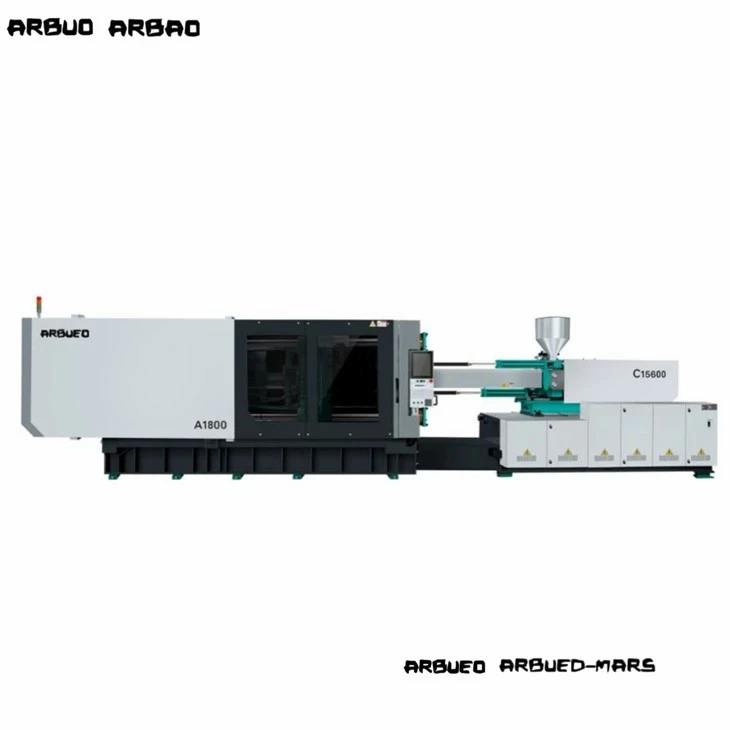
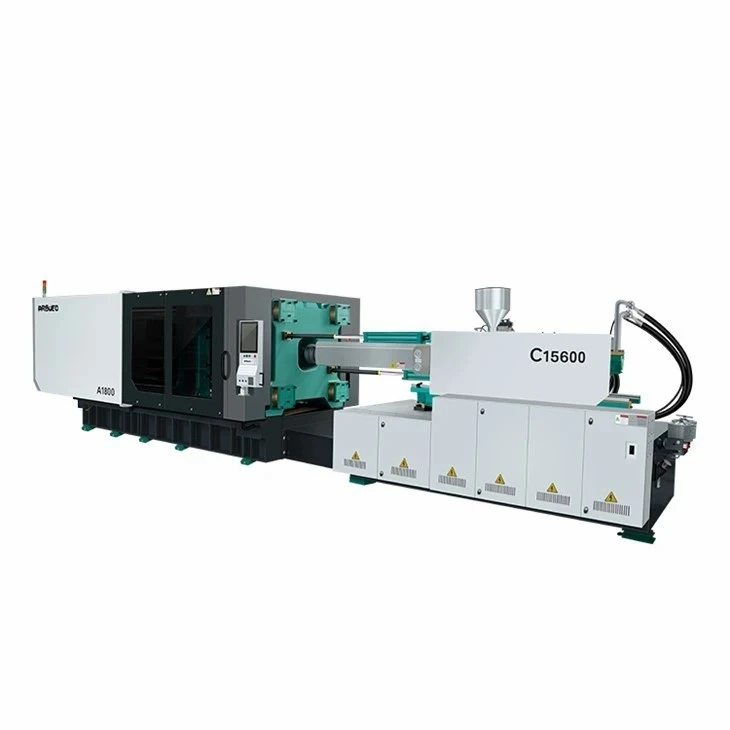
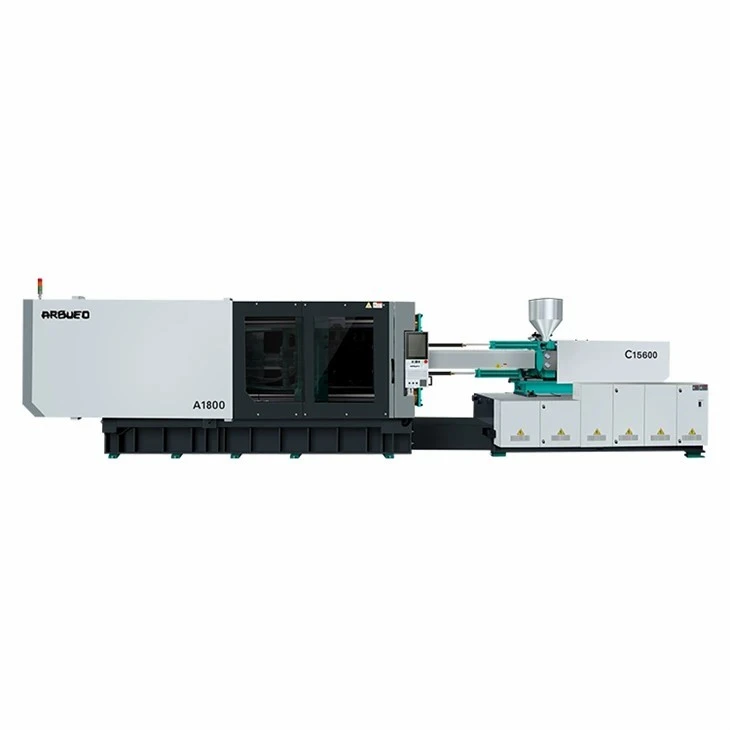
1800-Ton Injection Molding Machine
The 1800-ton horizontal hydraulic servo injection molding machine is built for high-tonnage, heavy-duty industrial manufacturing requiring high structural integrity, tight dimensional control, and repeatable output. Engineered for large-scale production runs, this platform utilizes an 8-point box-type frame and a servo-driven hydraulic system to process engineering resins and commodity plastics, including HDPE, PP, ABS, and filled PC alloys.
This machine targets high-volume manufacturing of structural components, such as automotive bumpers, dashboard carriers, heavy industrial pallets, municipal trash bins, and large appliance housings. By combining steady clamping force distribution with closed-loop injection feedback, it eliminates structural flash, part warping, and shot-to-shot density variations in thick-walled or complex geometries.
Key Specifications
|
Parameter |
Standard Configuration |
Optional Upgrades / Range |
|
Clamping Force |
18,000 kN (1,800 Ton) |
Fixed |
|
Platen Dimensions (H x V) |
2,150 mm x 2,050 mm |
Customized platen extensions available |
|
Distance Between Tie Bars (H x V) |
1,500 mm x 1,400 mm |
Extended tie-bar spacing available |
|
Max. Mold Opening Stroke |
1,500 mm |
Up to 1,750 mm for deep-draw parts |
|
Max. Mold Height |
1,400 mm |
Adjustable |
|
Min. Mold Height |
600 mm |
Adjustable |
|
Ejector Stroke |
350 mm |
Hydraulic multi-point ejection |
|
Ejector Force |
320 kN |
Up to 400 kN |
|
Screw Diameter Options |
A: 130 mm / B: 140 mm / C: 150 mm |
Bimetallic alloy / High-wear resistance coatings |
|
Theoretical Shot Volume |
8,620 cm3 - 11,480 cm3 |
Dependent on screw selection |
|
Injection Weight (PS) |
7,850 g - 10,450 g |
Up to 12,500 g with high-capacity injection units |
|
Injection Rate |
1,100 g/s - 1,450 g/s |
High-speed accumulator injection optional |
|
Max. Injection Pressure |
165 MPa - 195 MPa |
Adjusted via proportional control |
|
System Pressure |
17.5 MPa |
Fixed operating system threshold |
|
Pump Motor Power |
Servo System (110 kW - 160 kW) |
Multi-servo pump combination |
|
Heating Capacity |
65 kW - 85 kW |
Ceramic heating bands with PID control |
Key Features
Rigid Platen Structure: Computer-optimized box-frame platens reduce deflection under maximum clamping pressure, preventing wall thickness variances across large tool surface areas.
Variable Servo Hydraulics: Dynamic response motor-gear pump combination lowers energy usage by 30% to 50% compared to standard fixed-displacement hydraulic systems.
Linear Guide Rail Support: The movable platen glides on precision linear guide rails, reducing friction, eliminating platen drop, and protecting tie bars from uneven loading.
Multi-Stage Injection Control: Precise regulation of injection speed and hold pressure profile across up to 10 digital stages via closed-loop sensor feedback.
Proportional Mold Protection: Low-pressure, high-sensitivity mold protection logic stops mold closure instantly if resistance or obstruction is detected.
Centralized Automatic Lubrication: Volumetric grease distribution system lubricates toggle bushings, tie bars, and sliding shoes at program-defined intervals.
Working Principle / Machine Configuration
The unit operates on a horizontal five-point double-toggle hydraulic mechanism coupled with a single-axis plasticizing unit.
[Hopper / Feed Zone]
↓
[Barrel & Heating Zones (PID Controlled)]
↓
[Reciprocating Bimetallic Screw (Plasticizing & Dosing)]
↓
[High-Pressure Hydraulic Injection Cylinder] ---> [5-Point Toggle Clamping Unit]
↓
[Mold Cavity / Part Solidification]
Clamping Mechanism: The hydraulic cylinder drives the 5-point mechanical toggle link, amplifying force to lock the moving platen against the stationary platen at 18,000 kN. Mold height adjustments are handled via an internal gear-driven motor system to maintain parallel alignment.
Plasticizing & Injection Unit: Solid resin pellets flow from the hopper into the heated barrel. A hydraulic or electric servo motor turns the bimetallic screw, conveying material forward through controlled thermal zones. Once dosing is complete, twin hydraulic injection cylinders thrust the screw forward, pushing molten polymer into the sealed mold cavity under precise pressure curves.
Cooling & Ejection: Post-injection hold pressure prevents sink marks while the part cools. The toggle opens smoothly, and a multi-point hydraulic ejector pin assembly ejects the finished casting from the mold cavity.
Product-Specific Technical Advantages
Repeatability and Positional Precision
The core hydraulic line utilizes an absolute-value bus servo system. This setup monitors screw position, injection velocity, and clamp movement in real time, delivering repeatable injection position control down to +/-0.01 mm. This prevents common multi-cavity flaws such as short shots, flash, and weight variance in large industrial moldings.
Deflection-Resistant Frame Construction
Equipped with an 8-point box-type frame and heavy-duty structural gussets, the machine frame resists torsional deformation during rapid clamp lockup. High-rigidity platens ensure clamping force is distributed evenly over the central and outer mold surface, extending mold life and maintaining strict flash-free sealing tolerances.
Reduced Thermal Strain and Energy Loss
The servo system dynamically controls motor speed to match hydraulic pressure demand during each cycle stage (clamping, plasticizing, holding, cooling). During holding and cooling cycles, motor torque drops, cutting total power consumption and limiting oil heat buildup. This maintains hydraulic oil viscosity near optimal operating temperatures without overburdening external oil chillers.
Typical Applications
Front and rear bumper fascias
Door inner liners
Dashboard carriers
Wheel arch covers
Heavy-duty rackable pallets
Nestable shipping crates
240L / 660L / 1100L waste containers
Foldable bulk containers
Inspection chambers and sumps
Plastic formwork panels
Drainage utility boxes
Washing machine tubs and outer frames
Outdoor furniture and heavy-duty tables
Air conditioner outdoor unit housings
Material Compatibility
The standard heating barrel and screw assemblies are configured to process a broad range of thermoplastic materials, from commodity polymers to reinforced engineering resins:
HDPE / PP: Optimized screw designs feature dynamic mixing heads to ensure uniform color pigment dispersion and consistent melt flow indices for large packaging containers.
ABS / PC / PC+ABS Alloys: High-torque plasticizing setups maintain thermal stability without burning or degrading heat-sensitive resins during extended dwell times.
Glass-Reinforced Resins (e.g., PP + 30% GF, PA66 + 30% GF): Optional bimetallic barrels lined with tungsten-carbide alloys and screws coated with HVOF thermal sprays prevent wear from abrasive glass fibers.
Recycled Content (PCR/PIR Blends): Custom screw flights and high-capacity venting zones handle melt viscosity fluctuations and gas release associated with post-consumer resins.
How to Select / Configuration Options
To configure an 1,800-ton injection molding machine for a specific manufacturing cell, consider these operational requirements:
Screw Diameter Selection Matrix
|
Parameter |
130 mm (A Screw) |
140 mm (B Screw) |
150 mm (C Screw) |
|
Max. Injection Pressure |
High (195 MPa) |
Medium (180 MPa) |
Standard (165 MPa) |
|
Max. Shot Volume |
8,620 cm3 |
10,000 cm3 |
11,480 cm3 |
|
Target Application |
Precision structural parts, thin-wall components |
Standard automotive bumpers, crates, appliance shells |
Thick-walled industrial pallets, large waste bins |
Optional Modules & Features
Hydraulic Core Pull Assemblies: Up to 6-circuit core pull manifolds for molds with complex internal lifters and side sliders.
Accumulator-Assisted Injection: Nitrogen accumulators for high-speed injection requirements, suitable for thin-walled structural applications.
Electric Servo Plasticizing Drive: Independent electric motor drive for screw rotation, allowing parallel dosing during mold opening/cooling to shorten cycle times.
Air Blow Valves: Programmable pneumatic valves integrated into both stationary and moving platens for part-release assistance.
Magnetic Platen System: Electro-permanent magnetic platens for rapid tool changeovers, reducing downtime in short-run operations.
Manufacturing & Quality Control
Every machine undergoes structured quality assembly and inspection procedures before shipment:
Machining Accuracy: Platen mounting surfaces and tie-bar guide channels are finished on large CNC gantry milling centers to ensure strict parallelism and surface flatness tolerances.
Non-Destructive Testing (NDT): Ultrasonic testing is performed on major steel castings (platens, toggles, tailstocks) to check for internal voids, inclusions, or structural micro-cracks.
Hydraulic Pressure Integrity: Hydraulic manifolds undergo hydrostatic pressure testing at 1.5 times the rated working pressure to check for internal leaks and seal durability.
Run-In and Calibration: Each completed machine undergoes a continuous 48-hour dry run test, followed by real-time laser alignment checks of platen parallelism under full 18,000 kN clamping force.
Customization & OEM Support
Machine configurations can be adjusted to meet specific plant layouts, cycle requirements, and automation cells:
Customized Platen Layouts: Custom tie-bar clearance, extended mold stroke, and non-standard ejector pin patterns matching existing tool suites.
Automation Interface: Built-in Euromap 67 or SPI robotic interface plugs to connect 3-axis or 5-axis servo gantry robots and downstream automation cells.
Specialized Barrel/Screw Geometries: Dedicated screw profiles for specific materials, such as clear PMMA/PC optics, PVC corrosion resistance, or high-fill mineral compounding.
Power Supply Adaptation: Standard 380V/50Hz wiring can be adapted to 415V/50Hz, 460V/60Hz, or 230V/60Hz based on destination plant electrical standards.
What Buyers Should Provide for a Quote
To receive a detailed commercial quotation and machine specification proposal, please provide the following technical details:
Part Dimensions & Weight: CAD model (.STEP/.IGES) or physical dimensions (L x W x H) along with target shot weight (including runner system).
Resin Type & Grade: Specific raw material formulation (e.g., HDPE, PP + 20% Talc, PA6 + 30% GF, PCR blends).
Mold Specifications: Outer tool dimensions (L x W x H), total mold weight, slide sequence requirements, and core-pull circuit counts.
Target Cycle Time: Required daily production output or target cycle time per part.
Factory Infrastructure Requirements: Available electrical supply (Voltage/Hz), cooling water capacity, and overhead crane weight limit.
FAQ
Q: What size crane or lifting capacity is required to install this machine?
A: Installing an 1,800-ton injection molding machine requires split-shipment rigging. The machine ships split into two main sections: the clamping unit and the injection unit. The heaviest single lift (typically the clamping assembly) weighs between 55 and 70 metric tons, depending on optional platen extensions. A rigging crane rated for at least 80 metric tons or a dual overhead factory crane system is recommended for positioning during installation.
Q: How does the servo system perform under high ambient temperature conditions?
A: The machine features an oil temperature monitoring system linked with a plate-type oil heat exchanger. To maintain hydraulic oil within the ideal 40 degrees C to 50 degrees C window in warm climates, the plant should supply cooling water at 20 degrees C - 25 degrees C at a flow rate of at least 250 L/min. Optional air-cooled oil chillers or enlarged heat exchangers can be integrated for facilities operating in regions with high ambient temperatures.
Q: Can this 1,800-ton machine handle tools with low stack heights?
A: The minimum mold height for the standard clamp layout is 600 mm. For molds below 600 mm stack height, spatial bolster plates must be mounted on the platens to preserve toggle mechanism geometry and ensure full 18,000 kN clamping force without over-extending the stroke mechanisms.
Q: What utility connections must be prepared before installation?
A: The installation site must be prepared with:
Main electrical supply drops rated for 150 kW to 220 kW total connected load (including heating bands and servo drives).
Closed-loop industrial cooling water supply (minimum 3 bar inlet pressure).
Dry, regulated compressed air supply (6-8 bar) for pneumatic valve actuation and air blow functions.
Reinforced concrete floor foundation engineered for static and dynamic foundation loads exceeding 100 metric tons total machine weight.
Hot Tags: 1800 ton injection molding machine, China 1800 ton injection molding machine manufacturers, suppliers, factory


