


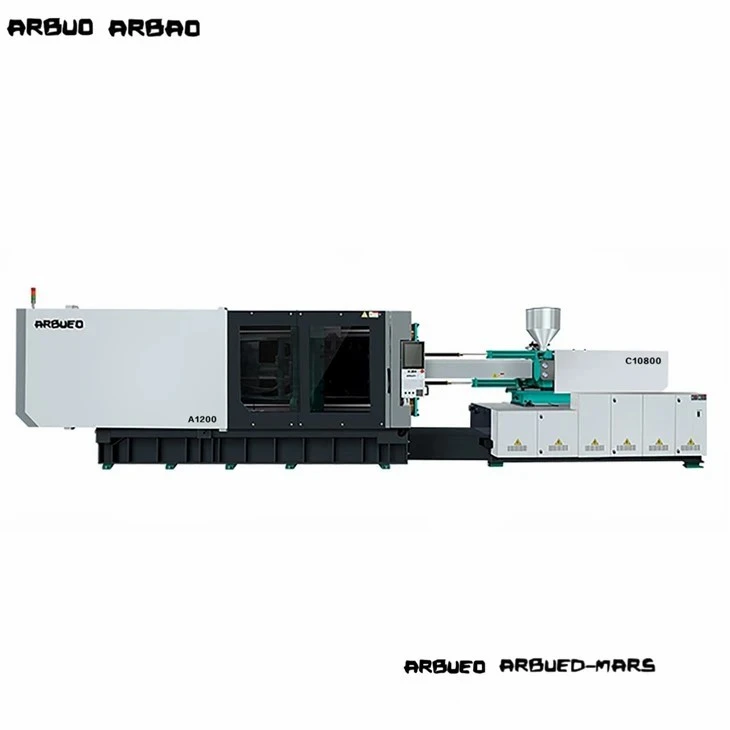
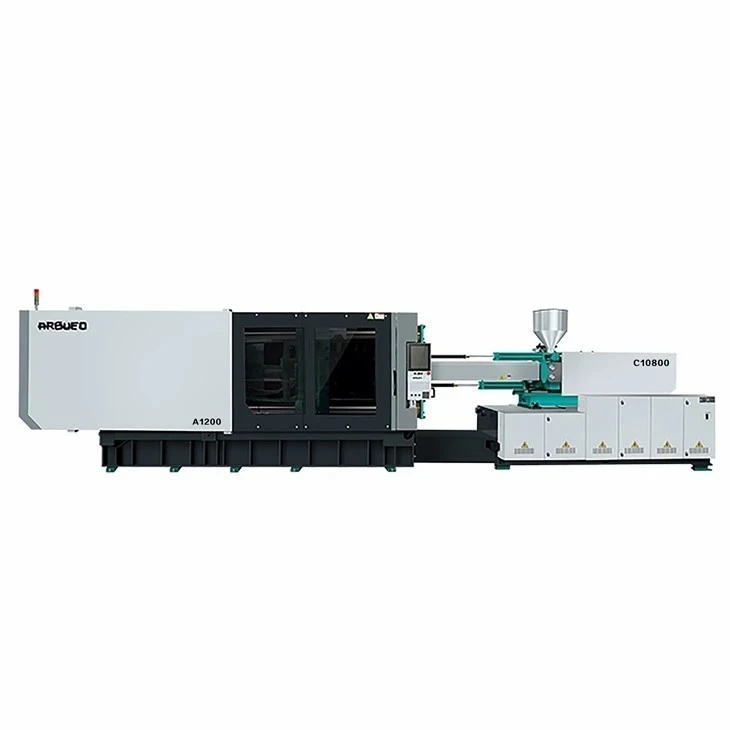
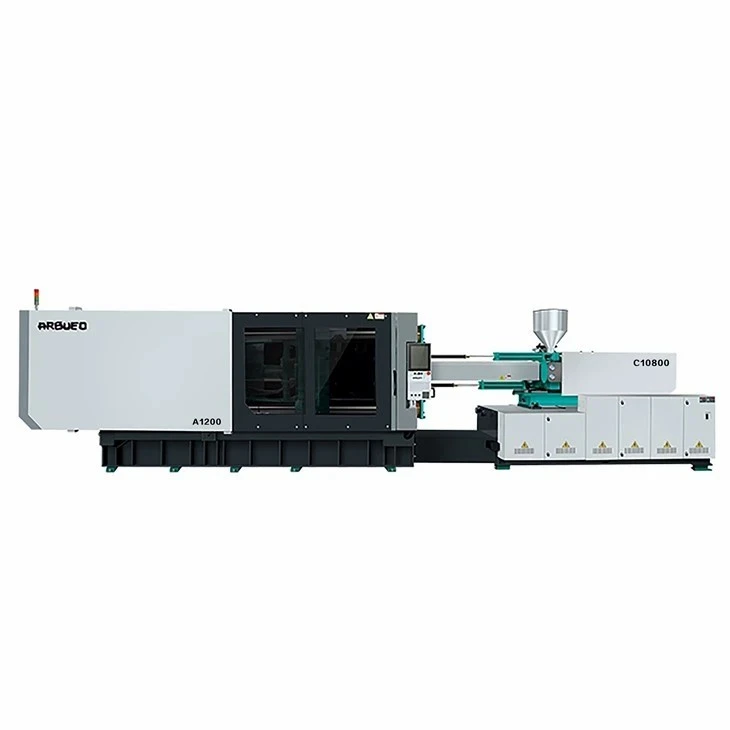
1200-Ton Injection Molding Machine
The 1200-Ton Hydraulic Injection Molding Machine is an industrial-grade, large-tonnage plastic processing platform built for high-volume manufacturing of thick-walled, large-surface, and structural plastic components. Designed with a heavy-duty five-point toggle clamping system, Finite Element Analysis (FEA) optimized platen geometry, and a closed-loop hydraulic servo drive, this machine balances 12,000 kN of holding force with precise shot control.
Engineering teams and tier-1 procurement managers specify this platform to produce automotive bumpers, structural instrument panels, industrial plastic pallets, municipal drainage crates, and thick-walled fittings. The machine minimizes cycle time variance, reduces thermal degradation, and lowers energy consumption during prolonged cooling phases.
Key Specifications
The core operational parameters below detail the mechanical dimensions, hydraulic capacities, and processing limits for the standard 1200-ton platform.
|
Specification Parameter |
Metric Units |
Imperial Equivalents |
|
Clamping Force |
12,000 kN |
1,348 US Tons |
|
Distance Between Tie Bars (H x V) |
1300 x 1200 mm |
51.18 x 47.24 in |
|
Platen Dimensions (H x V) |
1920 x 1820 mm |
75.59 x 71.65 in |
|
Mold Height Range (Min - Max) |
600 - 1250 mm |
23.62 - 49.21 in |
|
Maximum Daylight Opening |
2650 mm |
104.33 in |
|
Maximum Mold Opening Stroke |
1400 mm |
55.12 in |
|
Theoretical Shot Volume (Screw C) |
6220 cm³ |
379.5 cu. in |
|
Shot Weight (PS) |
5249 g |
185.1 oz |
|
Maximum Injection Pressure |
184 MPa |
26,686 psi |
|
Injection Rate |
1097 g/s |
38.69 oz/s |
|
Plasticizing Rate (HDPE) |
201 g/s |
7.09 oz/s |
|
Ejector Force / Stroke |
230 kN / 350 mm |
25.8 Tons / 13.78 in |
|
Servo Motor Power Rating |
112 kW |
150 HP |
|
Machine Dimensions (L x W x H) |
10.43 x 3.53 x 3.73 m |
34.2 x 11.6 x 12.2 ft |
|
Dry Machine Weight |
57 Metric Tons |
125,663 lbs |
Key Features
FEA-Optimized Platen Structure: High-tensile cast platens designed using Finite Element Analysis resist bending stress under full 12,000 kN clamping force, preventing mold deflection, flash along parting lines, and uneven cavity wear.
Closed-Loop Servo Power Drive: Variable-displacement hydraulic servo motors dynamically adjust power output according to processing load. Electrical power consumption drops during hold and cooling phases, reducing energy usage by 30% to 70% compared to traditional fixed-pump systems.
Induction-Hardened Tie Bars: Tie bars are forged from 40Cr steel, undergoing surface induction hardening, precision grinding, and hard chrome plating to maintain parallel movement and wear resistance over millions of cycles.
Closed-Loop Injection Controller: Digital control across multi-stage injection velocity, holding pressure, and backpressure profiles monitored via absolute linear encoders with positioning precision within ±0.1 mm.
Integrated Hydraulic Core Pull Systems: Equipped with multiple core pull circuits operated via solenoid valves, enabling automated core actuation for complex mold geometries such as pipe threads and internal undercuts.
Working Principle & System Architecture
Clamping Mechanics
The clamping unit utilizes a heavy-duty five-point double-toggle mechanism. Clamping tonnage generation relies on mechanical advantage combined with high-speed hydraulic movement. Mold thickness adjustment is driven by a gear motor coupled with pressure transducer feedback for automatic tonnage setting.
Process Flow: Hydraulic Cylinder Activation -> 5-Point Toggle Extension -> Moving Platen Advance -> Rigid Mechanical Lockup
Injection Mechanics
A twin-cylinder injection assembly delivers balanced axial force along the center line of the screw, preventing barrel tilting during high-pressure holding stages. Screw rotation is driven by a low-speed, high-torque radial piston motor suitable for shear-sensitive and highly filled engineering plastics.
Process Flow: Hydraulic Plasticizing Motor -> Dual Injection Cylinders -> Linear Encoder Position Tracking -> Nozzle Engagement
Global Component Sourcing Standards
Critical subsystems are built using verified industrial components to maintain global spare parts availability and long-term reliability:
Industrial Microcontroller: Techmation Q12A / Keba Controller Systems
Servo Motors & Drives: Techmation / Innovance / Delta
Main Hydraulic Pumps: Sumitomo / Vickers
Directional Hydraulic Valves: Yuken / Rexroth
Hydraulic Seals: NOK (Japan) / Hallite (UK)
Linear Position Encoders: Novotechnik / Miran
Electrical Switchgear: Siemens / Schneider Electric
Technical Advantages
Platen Parallelism & Deflection Control
Under maximum load, heavy molds (>15 tons) create localized bending forces. This machine places clamping force transfer points toward the mold mounting area center. At full 12,000 kN lockup, platen tilt is maintained within 0.08 mm per meter, eliminating flash risks on outer cavity borders and extending mold life.
Thermal Precision & Wear-Resistant Screw Assemblies
For glass-filled or abrasive compounds, the screw and barrel feature bimetallic nickel-alloy coatings applied via Plasma Transferred Arc (PTA) welding. Ceramic heating bands controlled by multi-stage PID microprocessors hold melt temperature variations within ±1.0°C.
Cold-Drawn Hydraulic Piping Network
Hydraulic lines use seamless cold-drawn steel tubes connected via steel ring flange joints rather than welded joints. This design minimizes internal fluid friction, prevents thermal oil degradation, and eliminates leakage risks associated with vibration-induced weld fatigue.
Typical Applications & Part Types
This platform processes large-format industrial components across critical manufacturing sectors:
Automotive Exterior & Interior: Front/rear bumpers, interior door panels, instrument dashboards, and wheel arch liners using PP + EPDM-T20 or ABS.
Logistics & Material Handling: Heavy-duty rackable pallets, foldable shipping crates, and industrial storage containers using HDPE or high-impact PP.
Civil Infrastructure: Municipal inspection chambers, large-diameter drainage pipe fittings, and cable junction boxes using Rigid PVC or PP-R.
Industrial Packaging: Heavy-wall liquid pails, chemical drums, and thick-walled tubs using LLDPE or PP Copolymer.
Home Appliances: Washing machine outer tubs, air conditioner base frames, and TV back covers using ABS, HIPS, or Talc-filled PP.
Material Compatibility
The plasticizing unit processes a wide range of thermoplastic resins, with pre-configured thermal and mechanical processing profiles stored in the controller memory:
Commodity Polyolefins: Polypropylene (PP), High-Density Polyethylene (HDPE), Polystyrene (GPPS/HIPS).
Engineering Polymers: Acrylonitrile Butadiene Styrene (ABS), Polyamides (PA6/PA66 filled with up to 40% glass fiber), Polycarbonate (PC), PC/ABS blends.
Temperature-Sensitive Materials: Rigid PVC (utilizing optional chrome-plated screw geometries and forced air-cooling barrel zones).
Post-Consumer & Recycled Resins (PCR): Designed with high-torque plasticizing hydraulics to handle regrind materials exhibiting variable Melt Flow Index (MFI) characteristics.
Configuration Options
To adapt the base platform to specific production requirements, buyers can select from the following configurable modules:
Screw & Barrel Variations
Type A Screw: Standard plasticizing profile for GPPS, ABS, and PP.
Type B Screw: Wear-resistant bimetallic screw for glass-filled engineering resins.
Type C Screw: High-mixing profile with specialized barrier flights for masterbatch dispersion.
Specialized Functional Packages
Accumulator-Assisted Injection Package: High-pressure nitrogen accumulators for ultra-high-speed injection in thin-walled applications.
PVC Processing Kit: Hard-chrome screw, specialized air-cooling fan assemblies, and dedicated temperature control circuits.
Automation Interface Integration: Pre-wired EUROMAP 67 or EUROMAP 73 interfaces for 3-axis servo robots and automated part extraction.
Quality Control & Testing Standards
Every machine undergoes structured manufacturing and quality verification protocols before factory dispatch:
Machining Accuracy Verification: Machine frames and platens are processed on multi-axis CNC gantry milling machines. Mounting surface flatness and tie-bar hole parallelism are verified via laser alignment tools.
Material Integrity Testing: Tie bar forgings and platen castings undergo Ultrasonic Non-Destructive Testing (NDT) to check for internal air voids, slag inclusions, or structural micro-cracks.
Hydraulic Pressure & Leakage Test: Hydraulic manifolds and piping networks are subjected to 125% of rated operating pressure to confirm seam integrity and valve switching response.
24-Hour Dry Run Factory Test: Fully assembled machines complete a continuous 24-hour cycle test, evaluating toggle joint lubrication, thermal equilibrium, sensor logic, and safety gate interlocks under operational conditions.
Customization & OEM Support
Custom Platen & Ejector Layouts: Custom tie-bar clearance dimensions, EUROMAP/SPI mold mounting hole patterns, and customer-specific mechanical ejector rod configurations.
Specialized Bimetallic Coatings: Custom tungsten carbide or nickel-based alloy barrel linings for processing highly corrosive or abrasive resins.
Voltage & Power Adaptations: Custom electrical cabinets built for specific regional power grids, including 380V/50Hz, 460V/60Hz, or 230V/60Hz standard supplies.
Information Required for a Technical Quote (RFQ)
Information Required for a Technical Quote (RFQ)
To enable engineering teams to verify mold fit, calculate required shot size, and issue a formal commercial proposal, please provide the following details with your inquiry:
3D Part Drawings (.STEP, .IGES, or .X_T format)
Target Plastic Material Grade and Filler Percentage (e.g., PA66 + 30% GF)
Mold Dimensions (Length x Width x Height) and Total Mold Weight
Required Shot Weight per Cycle (grams or ounces)
Target Production Cycle Time Requirements
Number of Hydraulic Core Pulls and Pneumatic Air Blow Circuits Required
Facility Operating Voltage and Frequency (e.g., 480V / 60Hz / 3-Phase)
FAQ
Q: What overhead crane capacity and building height are required for installation?
A: The overall machine height is 3.73 meters (12.2 ft). Installation requires an overhead crane capacity of at least 25 to 30 metric tons to handle the heaviest assembly (clamping unit frame and moving platen) and to set large industrial production molds into place safely.
Q: Is this 1200-ton machine suitable for thin-wall packaging applications?
A: The standard hydraulic drive provides standard industrial injection rates. For high-speed, thin-wall packaging with length-to-thickness (L/T) ratios exceeding 200:1, an optional nitrogen accumulator injection package must be specified to achieve the required filling velocities.
Q: How does the servo-hydraulic system perform in high ambient temperatures?
A: The machine includes a heavy-duty shell-and-tube oil cooler as standard equipment. In ambient factory environments exceeding 40°C (104°F), an external industrial chiller should supply cooling water at 18–22°C to maintain hydraulic oil temperatures within the optimal 35°C to 50°C range.
Q: Which safety standards and certifications apply to this machine?
A: Machines are built in compliance with European CE standards and feature dual-circuit electrical safety interlocks, hydraulic safety block valves, fully enclosed sliding doors, and emergency stop systems that meet ISO 13849-1 (Category 3/4) safety standards.
Hot Tags: 1200 ton injection molding machine, China 1200 ton injection molding machine manufacturers, suppliers, factory


