


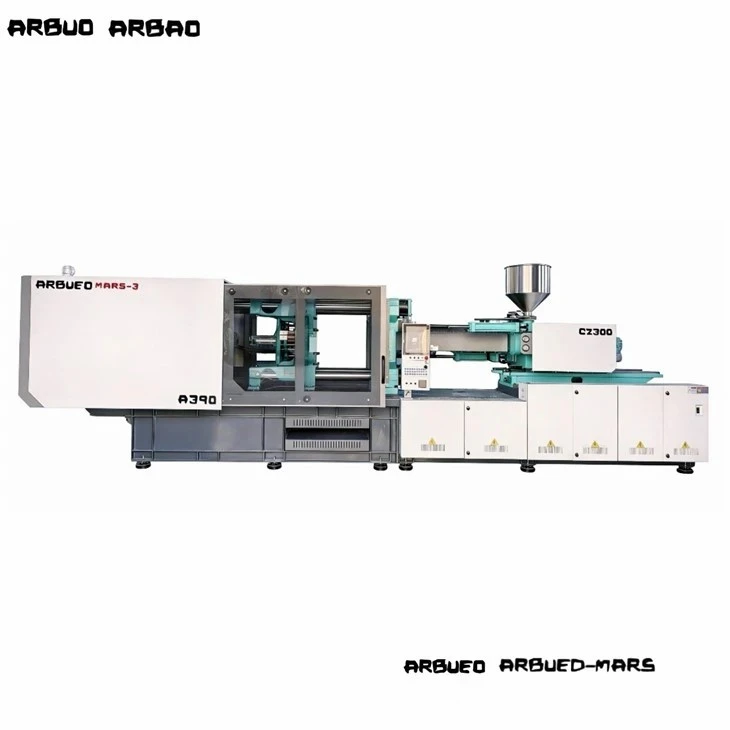
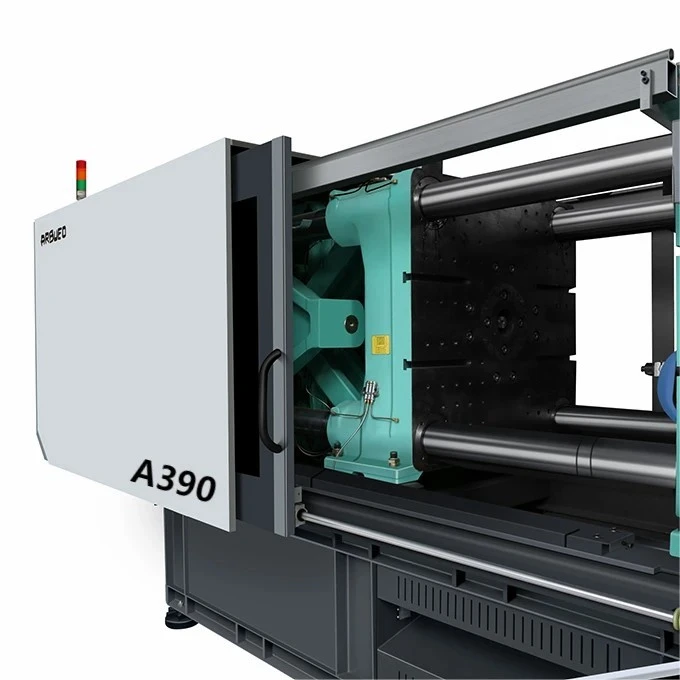
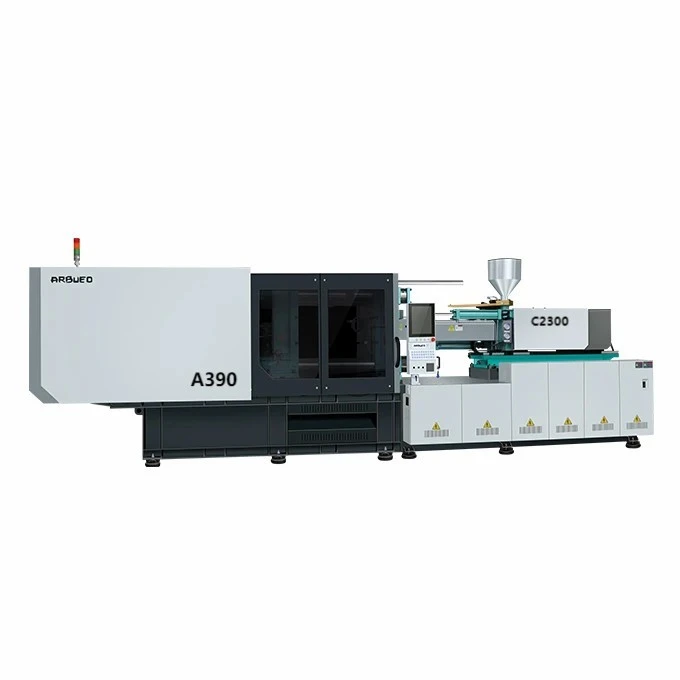
Servo Injection Molding Machine for Automotive Parts
This servo-driven hydraulic injection molding system produces high-precision interior, exterior, and under-the-hood automotive components. Operating across clamping forces from 100 to 3,300 metric tons, the machine integrates a closed-loop Phase/Inovance servo drive system and a Keba controller to regulate hydraulic pressure and flow in real time.
It handles technical resins-including PA6/PA66 with up to 40% glass fiber reinforcement, ABS, PC/ABS blends, and PP-while achieving repeat shot-weight accuracy within ±0.1%. Reduced hydraulic response times (within 40 ms) help maintain tight dimensional tolerances for thin-wall trim, structural brackets, and multi-cavity automotive fasteners, cutting energy consumption by 30% to 70% compared to fixed-displacement pump systems.
Key Specifications
|
Specification Parameter |
Value / Metric Range |
|
Clamping Force |
1,000 kN – 33,000 kN (100 – 3,300 Ton) |
|
Shot Weight (PS) |
120 g – 18,500 g |
|
Screw Diameter Range |
30 mm – 140 mm (A/B/C Screw Options) |
|
Screw L/D Ratio |
20:1 – 24:1 (Bimetallic Option Available) |
|
Injection Pressure |
1,400 bar – 2,400 bar |
|
Injection Response Time |
≤ 40 ms |
|
System Pressure |
16.0 MPa / 17.5 MPa |
|
Control System |
Keba i2000 / i3000 Touchscreen Controller |
|
Servo System |
Phase / Inovance Permanent Magnet Servo Motor |
|
Hydraulic Valve Hardware |
Yuken / Bosch Rexroth proportional valves |
|
Platen Dimensions (H x V) |
Customized per clamping ton (EUROMAP standard) |
|
Tie-Bar Clearance (H x V) |
Compliant with standard automotive mold dimensions |
|
Max. Hydraulic Core Pulls |
2-stage to 6-stage programmable control |
Key Features
Closed-Loop Servo Dynamics: Servo motor speed adjusts proportionally to required pressure and flow curves. Motor speed drops to near zero during cooling phases, reducing oil temperature rise and cutting cooling water demand.
Rigid Platen Geometry: Finite Element Analysis (FEA)-optimized platen structures minimize deflection under full clamping force, ensuring balanced parting line pressure and reducing flash on wide automotive panels.
Bimetallic Barrel & Screw Assembly: Carbide-alloy coated flight surfaces resist abrasive wear from high-percentage glass fiber fillers (PA66+GF) and chemical degradation from flame retardants.
Independent Core Pull Logic: Multi-circuit hydraulic core pulling allows complex lateral slide sequences, angular lifters, and unscrewing mechanisms to actuate simultaneously without pressure drops.
Real-Time Injection Curve Monitoring: High-resolution optical encoders and linear transducers track screw position, backpressure, and injection velocity at millisecond intervals to prevent short shots and structural sinks.
Machine Configuration
System Integration Flow: Servo Pump Drive System -> High-Dynamic Proportional Valves -> High-Torque Hydraulic Motor -> Bimetallic Screw/Barrel Assembly -> FEA-Optimized Toggle/Platen Clamping -> Programmable Core Pullers & Ejection Interlock
Primary Subsystems:
Injection Unit: Driven by a dual-cylinder hydraulic injection mechanism for balanced thrust alignment. Uses PID temperature control across 4 to 8 barrel heating zones (ceramic heaters standard).
Clamping Mechanism: 5-point double-toggle linkage featuring hardened steel bushings and automatic central grease lubrication. Generates high clamping rigidity and quick dry-cycle times.
Hydraulic Power Unit: Dual or multi-pump servo setup pairing internal gear pumps with permanent-magnet motors. Keeps hydraulic oil temperature under 55°C without auxiliary oil coolers.
Control Architecture: Keba industrial interface with integrated Euromap 67 (or Euromap 73) robot communication protocol, real-time diagnostic logs, SPC quality monitoring, and memory storage for 200+ mold sets.
Product-Specific Technical Advantages
Consistent Shot-to-Shot Precision: Servo-regulated pressure response maintains plastication consistency. Repeatability studies show volumetric deviation under ±0.1% over continuous 24-hour cycles, preventing flash and sink marks on long-flow automotive trim parts.
Lower Thermal Stress on Hydraulic Components: Operating oil stays at stable temperatures (40–50°C), preserving oil viscosity, extending hydraulic seal lifespan, and reducing seal deformation. Valve response remains consistent across 24/7 production shifts.
Integrated Core-Pull and Unlocking Sequences: Sequencing programs manage complex mold core pulling for interior clips, HVAC duct housings, and door handle slides without requiring extra external hydraulic power packs.
Extended Barrel Life for Filled Polymers: PTA (Plasma Transferred Arc) bimetallic layers protect barrel inner walls against glass-fiber erosion up to 45% fiber concentration, maintaining stable plasticating torque and thermal delivery.
Typical Applications
INTERIOR PARTS: Instrument Panels, Door Handle Bezels, Air Vent Louvers, Glove Box Latches.
EXTERIOR PARTS: Bumper Trim Strips, Rear Light Housings, Wheel Arch Covers, Pillar Covers (A/B/C).
UNDER-THE-HOOD (PTH): Engine Cover Caps, Fuse Box Enclosures, Intake Manifold Clips, Brake Fluid Reservoirs.
Interior Trim & Housing: High visual surface finish requirements; processed without sink marks, weld lines, or warpage.
Exterior Lighting & Structural Modules: Deep-draw housings requiring precise multi-core slider pulling and clean parted surfaces.
Under-the-Hood Structural Elements: Glass-reinforced resins processed with strict backpressure control to prevent fiber degradation during plastication.
Material Compatibility
PA6 / PA66 (10-40% GF) | Temp: 260°C – 310°C Requires bimetallic wear protection; precise backpressure control preserves glass fiber length.
PC + ABS Blends | Temp: 240°C – 280°C Demands uniform heating zone control and low shear stress to prevent stress cracking.
PP (Mineral Filled/TPO) | Temp: 190°C – 240°C Low viscosity material; requires dynamic hydraulic response to avoid flash at high injection speeds.
ABS / PMMA | Temp: 200°C – 250°C High visual clarity/surface requirement; requires precise hold-pressure profiles to eliminate sink.
POM (Acetal) | Temp: 180°C – 215°C Narrow processing window; precise barrel temperature control prevents thermal degradation.
How to Select / Configuration Options
Match machine clamping force and injection capacity to mold and resin requirements:
Clamping Force Calculation Projected Surface Area (cm²) × Material Clamp Factor (0.3 – 0.8 Ton/cm²) = Minimum Clamping Force (Ton)
Injection Capacity Check Calculate Mold Shot Weight (g) vs. Barrel Swept Volume (g). Shot weight must fall between 20% and 80% of total injection capacity.
Core Pull & Ejection Evaluation Select standard single-circuit or multi-circuit core pull sequences based on tool mechanics.
Plastication Metallurgy Selection Standard Nitrided Screw (unfilled resins) vs. Bimetallic Screw/Barrel (glass fiber content > 15%).
Optional Configurations:
Custom L/D Ratio Screws: Low-shear screw geometries tailored for PC/ABS or high-mixing screws for masterbatch blending.
Sequential Valve Gating: Integrated hydraulic/pneumatic sequence control units for hot runner molds (up to 12 zones).
Accumulator-Assisted Injection: High-speed injection configurations (up to 400 mm/s) for thin-wall automotive connectors and optical lenses.
Euromap 67 / 73 Interface: Plug-and-play connections for 3-axis top-entry servo robots or 6-axis articulated robotic arms.
Manufacturing & Quality Control
Structural Machining: Machine platens, toggles, and frames are machined on 5-axis CNC machining centers to ensure parallel clamping surfaces within 0.05 mm tolerances.
Ultrasonic Flaw Detection: Tie bars undergo ultrasonic non-destructive testing (NDT) to prevent fatigue cracks under continuous cyclic stress.
Hydraulic System Testing: Hydraulic manifold blocks pass high-pressure flushing and particle analysis (ISO 4406 cleanliness standard) before final assembly.
Full-Load Testing: Every machine completes a 72-hour continuous dry-run cycle alongside high-pressure holding tests to verify hydraulic seal integrity and thermal stability before dispatch.
Customization & OEM Support
Platen Enlargement & Tie-Bar Clearance: Custom tie-bar dimensions accommodate large automotive molds or side-core extraction systems.
Specialized Injection Units: Dual-color/multi-component injection retrofits (slant, vertical, or parallel orientation) for multi-material interior trim molding.
Integrated Automation Cell Integration: Customized end-of-arm tooling (EOAT) control, conveyor belt interlocking, and automated gate-cutting stations built to factory layout specifications.
Specialized Barrel Heating: Infrared or insulated ceramic band heaters engineered for high-temperature engineering plastics (e.g., PEEK, PEI).
What Buyers Should Provide for a Quote
To receive an accurate engineering proposal and commercial quotation, share the following technical details:
Automotive Part Drawing / 3D CAD: .STEP, .IGS, or .X_T files indicating part dimensions, wall thickness, and weight.
Resin Specification: Plastic grade (e.g., PA66 + 30% GF, PC/ABS), density, and moisture drying parameters.
Mold Dimensions & Layout: Mold base size (L x W x H), total weight, runner type (hot runner vs. cold runner), and gate counts.
Core Pulling Requirements: Number of hydraulic core pulls, cylinder stroke lengths, and slide actuation sequences.
Target Cycle Time & Production Volume: Required parts-per-hour and automation preferences (robot pick-and-place, sprue picker, automated conveyor).
FAQ
Q: How does a servo hydraulic machine compare to an all-electric machine for automotive parts?
A: Servo hydraulic machines provide higher clamping forces (up to 3,300+ Tons) and cost-effective performance for medium-to-large automotive components requiring hydraulic core pulling. All-electric machines offer higher energy efficiency and precision for small-to-medium parts under 400 Tons, but come with a higher initial equipment investment.
Q: What clamping force is typically needed for automotive interior door panels?
A: Automotive door panels generally require clamping forces between 1,000 and 1,800 Tons, depending on part dimensions, wall thickness, and material flow length.
Q: How does the servo system reduce factory energy costs?
A: Conventional fixed-displacement pumps run at a constant speed, dumping unused hydraulic oil back to the tank and generating waste heat. The servo motor adjusts its rotational speed in real time based on active hydraulic demand, consuming minimal power during hold-pressure and cooling phases.
Q: Is the Keba controller compatible with MES and Industry 4.0 systems?
A: Yes. Keba controllers support OPC-UA, Euromap 63, and Euromap 77 communication protocols. They allow real-time parameter monitoring, shot data export, and direct integration with factory-wide Execution Systems (MES).
Q: What core pull support is built in for complex automotive tooling?
A: Standard configurations include software options for 2-stage core pulling. Expandable hydraulic manifold modules can support up to 6 independent core-pulling circuits with programmable position, pressure, and speed settings.
Hot Tags: servo injection molding machine for automotive parts, China servo injection molding machine for automotive parts manufacturers, suppliers, factory


