


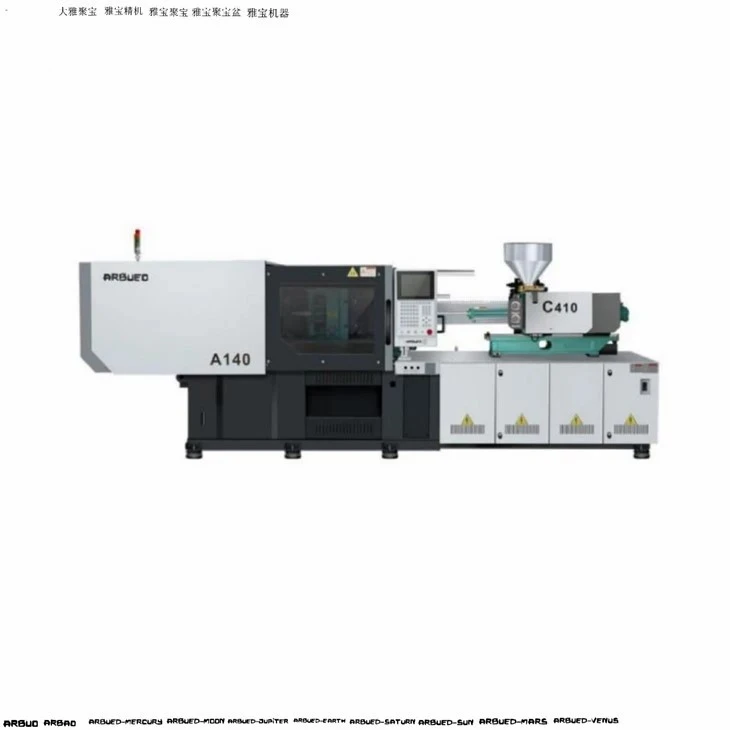
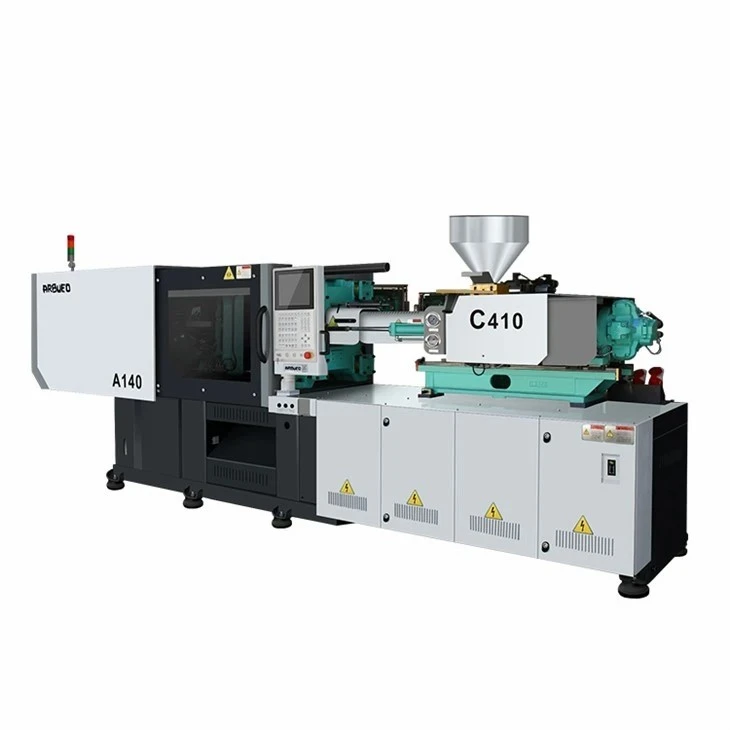
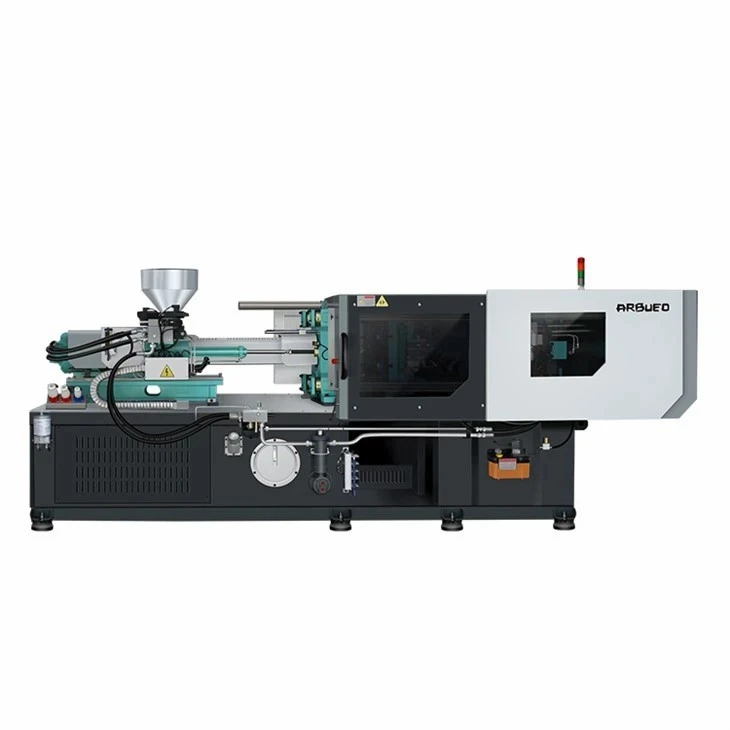
High-Speed Servo Injection Molding Machine
An energy-efficient horizontal servo hydraulic injection molding machine engineered for continuous, high-precision industrial production. Built with an absolute-value common-bus servo drive system, high-rigidity platen kinematics, and real-time closed-loop pressure and flow control. Designed to lower kilowatt-hour consumption per kilogram of processed polymer while maintaining repeatable cycle times across automotive, medical, packaging, and technical molding operations.
Key Specifications
|
Parameter |
Technical Range / Capability |
|
Clamping Force Range |
70 Ton - 2,300 Ton (700 kN - 23,000 kN) |
|
Shot Weight (PS Equivalent) |
45 g - 12,500 g |
|
Tie-Bar Clear Spacing |
310 x 310 mm up to 1,650 x 1,500 mm |
|
Injection Pressure |
Up to 2,200 bar (screw diameter dependent) |
|
Ejection Stroke / Force |
70 mm - 450 mm / 22 kN - 380 kN |
|
Power System Topology |
Absolute-encoder common-bus AC servo motor + gear pump |
|
Positional Control Accuracy |
Mold closing / opening repeatability: +/-0.01 mm |
|
Hydraulic System Response Time |
System pressure buildup down to 30 ms |
|
Control Architecture |
Microprocessor controller with CANbus digital IO & Ethernet |
|
Compliance Standards |
CE directive compliant, ISO 9001 quality system certified |
Key Features
Dynamic Servo Power Architecture: Eliminates bypass throttling loss typical of fixed-displacement pump setups. Power consumption scales dynamically with physical process phase demands, drawing baseline idle current during cooling phases.
Rigid Platen & Eight-Pivot Toggle Kinematics: Computer-optimized five-point double-toggle clamping mechanism backed by an eight-pivot box structure. Prevents center-platen deflection under maximum tonnage, ensuring balanced clamp force distribution across multi-cavity tooling.
High-Response Closed-Loop Controller: Real-time monitoring of screw position, injection velocity, hold pressure transition, and hydraulic oil temperatures with multi-stage programmable profiles.
Wear-Resistant Screw & Barrel Assemblies: Nitrided or bimetallic processing units designed to handle glass-fiber reinforced, corrosive, or flame-retardant thermoplastics without premature axial wear.
Proportional Mold Protection: Low-pressure mold protection mode detects foreign objects or un-ejected parts prior to high-pressure clamp lockup, preventing tool damage.
Working Principle & Power Distribution
The power delivery relies on a dynamic servo drive operating on a common DC bus architecture. Unlike standard induction motors running at a constant RPM with proportional relief valves dumping excess flow, the absolute-encoder servo motor modulates rotational speed in real time based on system demands.
Power Sequence & Energy Flow
System Control Signal: The controller issues a digital speed and pressure command to the absolute-encoder servo drive.
Dynamic Motor Control: The drive controls a permanent-magnet AC motor, which operates an internal gear hydraulic pump.
Phase-Specific Hydraulic Output:
Plasticizing & Holding: Full or controlled torque is delivered to maintain precise screw RPM and hydraulic melt pressure.
Cooling Phase: Motor rotational speed drops to minimal idling levels, reducing power draw to 0% - 5% of standby capacity during stationary dwell times.
Regenerative Energy Recovery: Kinetic energy generated during high-speed deceleration cycles is captured and shared across the internal common DC bus line, minimizing heat dissipation inside the hydraulic cabinet.
Product-Specific Technical Advantages
30% - 60% Energy Reduction Over Fixed-Displacement Systems: Real-world power measurements show specific energy consumption dropping down to 0.28 - 0.38 kWh/kg for standard polyolefins, depending on cycle duration and cooling duty.
Low Oil Temperature Operating Envelope: Reduced hydraulic fluid shear keeps average oil reservoir temperatures between 38°C and 45°C without demanding excessive external cooling tower capacity. This prolongs oil seal longevity and maintains consistent fluid viscosity throughout 24-hour production runs.
Repeatable Injection Weight Tolerance: Servo response time under 30 ms allows millisecond-level precision switching from injection velocity control to hold pressure control. Peak shot weight variation stays within +/-0.1% on standard precision molding runs.
Platen Deflection Prevention: Finite Element Analysis (FEA) verified platen casting designs maintain structural rigidity under maximum clamping pressure, preventing flash generation along parting lines and extending tooling life.
Typical Applications
Automotive Exterior & Interior Components: Dashboards, door trim panels, lamp housings, fuse boxes, and engine bay shrouds requiring high structural strength and low warpage.
Thin-Wall Food & Logistics Packaging: High-speed multi-cavity food containers, caps, closures, and heavy-duty storage crates requiring short cycle times.
Medical Consumables & Enclosures: Syringe barrels, petri dishes, IV connector components, and diagnostic cassette housings molded under cleanroom conditions.
Industrial & Home Appliance Components: Washing machine tubs, air conditioner housings, electrical junction boxes, and precision gear housings.
Material Compatibility
Standard and specialized screw geometry profiles accommodate a wide range of thermoplastic polymers:
|
Material Category |
Polymer Types |
|
Commodity Resins |
PP, PE (HDPE/LDPE), PS, ABS, HIPS |
|
Engineering Thermoplastics |
PA6, PA66, PC, POM, PBT, PET, PMMA |
|
Reinforced & Filled Materials |
Glass Fiber-Filled PA/PBT (up to 40%), CaCO3 |
|
Recycled & Regrind Blends |
Post-Consumer Recycled (PCR) flakes, Industrial regrind |
Standard Screw: 20:1 L/D ratio balanced for polyolefin plasticizing throughput and homogenizing melt quality.
Engineering Screw: Barrier flights with mixing headers for processing PC, ABS, and PC/ABS alloys without thermal degradation or color streaking.
Corrosive/Abrasive Configuration: Fully bimetallic barrel with tungsten carbide lining paired with a hardened tool steel screw for processing flame-retardant (V-0 rated) compounds or fiber-filled formulations.
How to Select / Configuration Options
Selecting the appropriate machine configuration requires calculating necessary clamping force and injection capacity based on product geometry:
Minimum Clamping Force Calculation
Clamping Force (Tons) = [ Project Area (cm^2) x Cavity Pressure (bar) / 1000 ] x Safety Factor (1.1 - 1.2)
Thin-Wall / Packaging Parts: 0.6 - 0.9 Tons/cm^2
Technical / Engineering Parts: 0.4 - 0.6 Tons/cm^2
Thick-Wall Commodity Parts: 0.3 - 0.4 Tons/cm^2
Shot Weight Matching
Ensure total shot weight (including runners) utilizes between 20% and 80% of the machine's maximum swept barrel capacity to prevent polymer degradation from excessive residence time or inconsistent plasticizing.
Machine Selection Flow
Select Base Clamping Tonnage: Range from 70T to 2300T based on clamping force calculations.
Select Hydraulic Power Layout:
Standard Hydraulic Layout: Suitable for cycle times greater than 8 seconds and general technical molding applications.
High-Speed / Accumulator Setup: Suitable for thin-wall packaging (< 1 mm wall thickness) requiring injection speeds up to 300+ mm/s.
Select Screw and Barrel Package:
Standard Nitrided: For non-abrasive commodity resins.
Bimetallic Wear Resistant: For glass-fiber, flame-retardant, or abrasive compounds.
Degassing / PVC Special: For heat-sensitive or venting-intensive formulations.
Manufacturing & Quality Control
Machines are manufactured under ISO 9001 quality management procedures and strictly conform to European CE machinery safety directives:
Precision Machining: Platen surfaces, tie-bar locations, and bedframes are machined on 5-axis CNC gantry milling centers to maintain parallel tolerances within 0.05 mm across platen diagonals.
Component Traceability: Critical hydraulic valves, servo motors, drives, and controllers are sourced from verified global component suppliers with full batch serial number tracking.
Stress Relieving: Welded structural machine bases undergo vibration stress relief or thermal annealing treatment prior to finish machining to eliminate internal stresses and avoid structural warping over time.
Factory Acceptance Testing (FAT): Every unit completes a continuous 24-hour dry-cycle test followed by full-tonnage pressure retention testing and hydraulic pressure testing prior to factory dispatch.
Customization & OEM Support
Tailored hardware and software options are available to match specific production line requirements:
Extended Tie-Bar Clearance & Daylight: Custom frame extensions to accommodate deep-draw molds, stack molds, or core-pull heavy tooling.
Core-Pull & Unscrewing Hydraulics: Multi-stage programmable hydraulic core-pull circuits and continuous-rotation unscrewing motor controls integrated into the main PLC.
Specialized Processing Packages:
PET Preform Package: Reinforced plasticizing drive, high L/D ratio screw, and integrated dehumidifier interface.
PVC Pipe Fitting Package: Hardened alloy screw tip, forced air cooling on barrel zones, and targeted thermal monitoring.
Liquid Silicone Rubber (LSR): Cooled barrel assemblies, spring-loaded shut-off nozzles, and vacuum venting interface controls.
Automation Interfaces: Euromap 63 / Euromap 67 / OPC UA interfaces for standardized communication with robot top-entry pickers, side-entry automation, and MES network tracking.
What Buyers Should Provide for a Technical Quote
To receive an accurate commercial quotation and technical proposal, provide the following parameters:
|
Item |
Parameter / Requirement |
|
Part Details |
2D/3D CAD drawings (STEP/IGS/PDF) with key dimensions |
|
Material Specification |
Specific polymer grade, MFI/MFR, percentage of fillers |
|
Mold Specifications |
Mold dimensions (L x W x H), total weight, number of cavities |
|
Target Production Output |
Required cycle time, daily volume requirements |
|
Plant Infrastructure |
Operating voltage/frequency (e.g., 400V 50Hz, 480V 60Hz) |
|
Peripheral Requirements |
Automation interfaces, core-pulls, hot runner zones |
FAQ
Q: What is the average lead time from order placement to shipment?
A: Standard tonnage models (70T - 450T) maintain a typical factory build time of 20 to 30 calendar days. Large-tonnage machines (over 600T) or units requiring specialized custom barrel configurations require 45 to 60 calendar days, subject to Factory Acceptance Testing completion.
Q: How does the energy consumption compare to full electric machines?
A: Servo hydraulic machines deliver 80% - 90% of the energy savings achieved by all-electric machines while retaining higher clamp force capacities, superior hydraulic core-pull capabilities, and significantly lower initial capital expenditure and maintenance costs on heavy-duty components.
Q: What warranty coverage and spare parts support are included?
A: Machines include a 12-month comprehensive machine warranty covering major structural castings, tie bars, platen assemblies, servo motors, hydraulic pumps, and control hardware. Critical replacement wear parts (seals, heater bands, thermocouples) are shipped with the initial machine toolkit, and standard components are stocked globally for rapid replacement.
Q: Can the machine controller interface with centralized factory software?
A: Yes, controllers support standard Ethernet networking options and common communication protocols (such as OPC UA / Euromap standards), enabling remote real-time data monitoring, production logging, fault logging, and integration into modern Smart Factory / MES networks.
Hot Tags: energy efficient servo injection molding machine, China energy efficient servo injection molding machine manufacturers, suppliers, factory


