


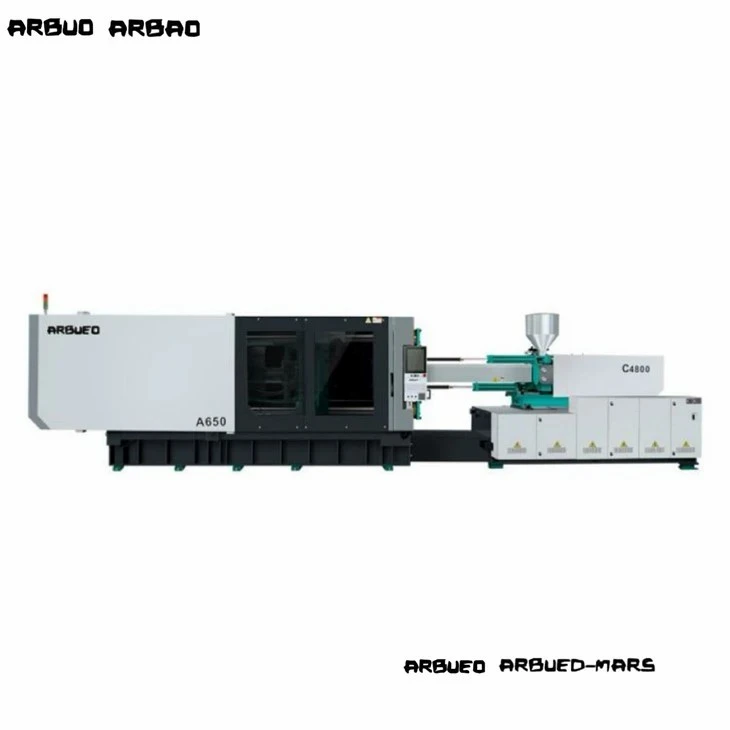
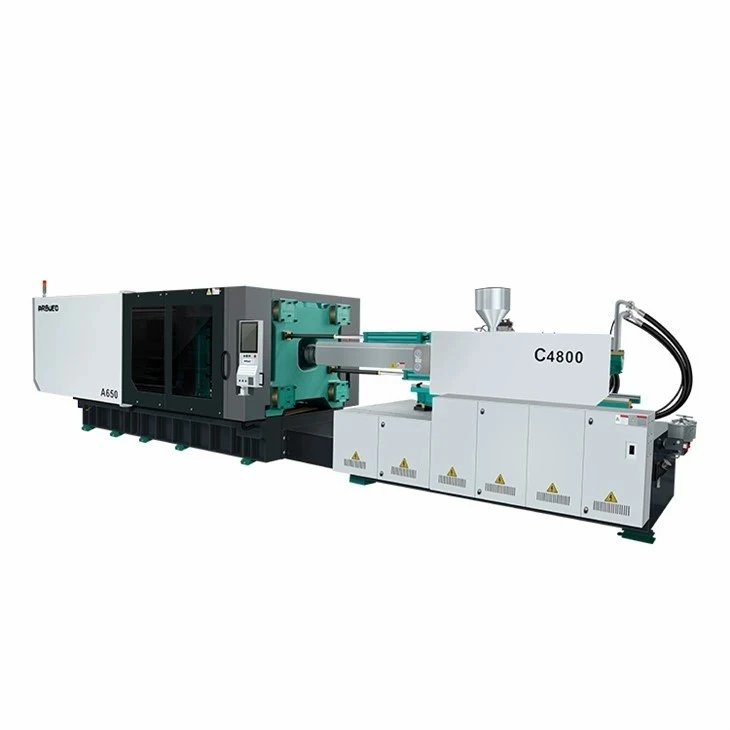
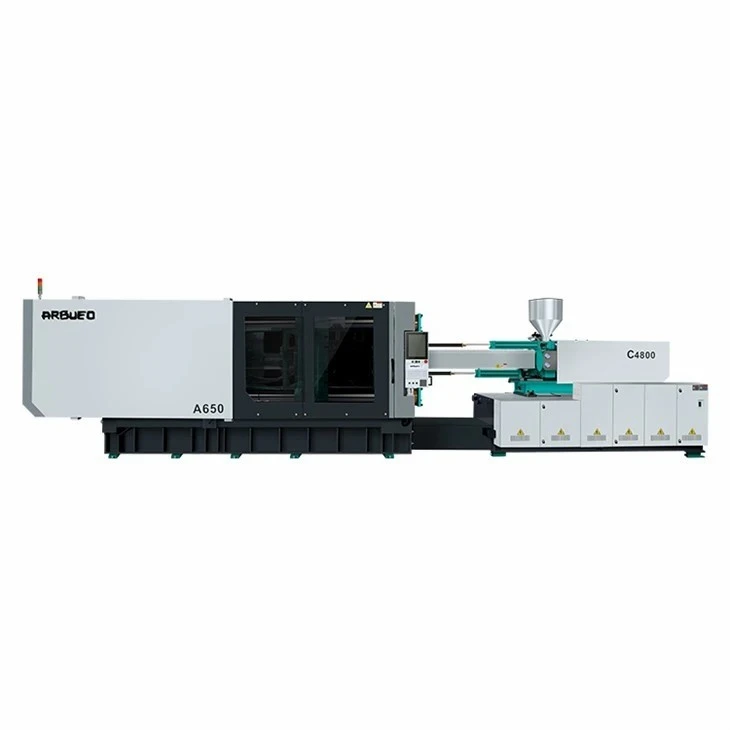
Energy Efficient Hybrid Injection Molding Machine
The Energy Efficient Hybrid Injection Molding Machine integrates electric servo-driven injection units with a high-rigidity hydraulic clamping system. Engineered for thin-wall precision molding, medical components, and automotive parts, this hybrid drive architecture combines the dynamic response of electric servo motors (up to 250 mm/s injection speed) with the concentrated holding force of hydraulic systems.
By replacing traditional proportional valve hydraulics with servo-electric screw drives for plasticizing and injection, this system reduces overall energy consumption by 40% to 70% compared to standard hydraulic machines. Dry cycle times are reduced to 1.2 seconds on medium-tonnage frames, enabling high-speed, repeatable mass production with shot weight precision within +/-0.1%.
Hybrid Drive Architecture Overview
Electric Servo System (Precision & Rapid Response): Controls the plasticizing screw drive, injection axis motion, and parallel motion control.
Hydraulic System (High Tonnage Force): Manages mold clamping force generation, core pullers, knockout pins, and the mold height adjustment mechanism.
Key Specifications
The parameters below represent standard configurations across our hybrid machine series. Custom clamping tonnage and injection unit combinations are available upon request.
|
Parameter |
Unit |
Hybrid Model 160T |
Hybrid Model 260T |
Hybrid Model 380T |
Hybrid Model 500T |
|
Clamping Force |
kN / Ton |
1,600 / 160 |
2,600 / 260 |
3,800 / 380 |
5,000 / 500 |
|
Tie Bar Clearance (H x V) |
mm |
470 x 470 |
580 x 580 |
720 x 720 |
830 x 830 |
|
Maximum Opening Stroke |
mm |
430 |
530 |
670 |
780 |
|
Platen Dimensions (H x V) |
mm |
700 x 700 |
850 x 850 |
1,060 x 1,060 |
1,220 x 1,220 |
|
Screw Diameter (A / B / C) |
mm |
40 / 45 / 50 |
50 / 55 / 60 |
60 / 65 / 70 |
75 / 80 / 85 |
|
Max. Shot Weight (PS) |
g |
230 / 291 / 360 |
412 / 498 / 593 |
750 / 880 / 1020 |
1380 / 1570 / 1770 |
|
Theoretical Injection Vol. |
cm3 |
251 / 318 / 392 |
451 / 546 / 650 |
820 / 962 / 1116 |
1510 / 1718 / 1940 |
|
Max. Injection Pressure |
bar |
2,200 / 1,740 / 1,410 |
2,150 / 1,770 / 1,490 |
2,050 / 1,740 / 1,500 |
1,950 / 1,710 / 1,510 |
|
Injection Rate (Fast Drive) |
cm3/s |
310 |
450 |
620 |
850 |
|
Ejector Stroke / Force |
mm / kN |
130 / 42 |
160 / 65 |
180 / 98 |
220 / 120 |
|
Dry Cycle Time (Euromap) |
s |
1.2 |
1.5 |
2.1 |
2.6 |
Key Features
Electric Plasticizing Axis: AC permanent-magnet servo motor drives the screw directly through a low-backlash planetary gearbox. Plasticizing occurs simultaneously with mold movement, reducing total cycle times by 15% to 30%.
High-Response Hydraulic Clamping: Closed-loop servo-pump hydraulics drive the five-point double toggle clamping mechanism. Pressure buildup reaches maximum tonnage in under 0.08 seconds.
Synchronized Parallel Motion: Controller firmware manages simultaneous mold opening, ejector forward motion, and screw recovery without hydraulic flow division losses.
Low Oil Volume Hydraulic Reservoir: Servo-pump architecture reduces oil storage requirements by 55% compared to traditional variable-displacement pump machines. Lower fluid friction maintains oil temperatures below 45 deg C without auxiliary chiller assistance under standard room conditions.
Linear Guide Support for Moving Platen: Recirculating roller linear guides support the moving platen weight, eliminating tie-bar wear and preventing lubricant contamination in the mold cavity area.
Machine Configuration
System Layout Breakdown
Ejector System: Driven by hydraulic actuators and managed through a dedicated core pull manifold.
Clamping Platen: Supported by precision linear guides and driven by a five-point toggle mechanism.
Injection Unit: Powered by an AC servo plasticizing motor with linear encoder guidance for accurate displacement tracking.
Injection Unit Structure
Linear Motion Guides: The injection unit carriage slides on dual hardened linear rails, eliminating tilting forces during high-pressure injection movements.
Drive Mechanism: High-torque AC servo motor connected to a precision ground ball screw (C3 accuracy grade) for axial injection stroke control.
Barrel Heating: Ceramic heating bands controlled via PID multi-zone loops with solid-state relays (SSR). Temperature accuracy held within +/-1.0 deg C.
Clamping Unit Structure
Platen Stiffness: Cast iron platens designed via Finite Element Analysis (FEA) to minimize center deflection under full clamping tonnage.
Tie Bars: 42CrMo high-tensile alloy steel bars, induction hardened and hard-chrome plated (layer thickness >= 30 um) for friction reduction and fatigue resistance.
Automatic Lubrication System: Centralized micro-dose oil lubrication pump delivers precise fluid quantities to toggle pins based on cycle counts, preventing grease buildup and oil drops.
Product-Specific Technical Advantages
Energy Consumption Benchmark
Standard Hydraulic System (Fixed Pump): 100% baseline energy consumption.
Variable Displacement Pump System: 70% energy consumption (30% energy reduction).
Servo Hydraulic System: 45% energy consumption (55% energy reduction).
Hybrid Servo-Electric System: 30% energy consumption (70% total energy reduction).
The hybrid architecture eliminates idling energy losses. Electric servo motors operate only when specific movements occur, reducing baseline standby power draw to under 0.5 kW/h.
Injection Acceleration & Response
Injection velocity response time: <= 15 ms from 0 to 250 mm/s.
Screw position repeat accuracy: +/-0.01 mm via absolute optical encoders.
Pressure transition control: V/P (Velocity-to-Pressure) switchover point repeatability within 0.05 bar, eliminating flash and short shots on thin-wall geometries down to 0.35 mm wall thickness.
Typical Applications
Industry Application Capabilities
Automotive: Designed for low deformation and high strength parts. Hybrid Advantage: Highly stable holding pressure phase.
Medical Devices: Designed for cleanroom production with zero oil contamination. Hybrid Advantage: Linear guide platen support eliminates grease in cavity zones.
Thin-Wall Packaging: Designed for fast cycle times and high injection speeds. Hybrid Advantage: Parallel plasticizing during mold operation.
Industry Details
Automotive Industry: Structural connectors, interior switch trim, light housings, and under-hood fuse boxes requiring strict dimensional tolerances (ISO 20457 grade TG4) and low warp deformation.
Medical & Precision Components: Syringe barrels, luer lock fittings, micro-fluidic chips, and inhaler housing components molded in Class 8 cleanroom environments without grease contamination.
Thin-Wall Packaging: Food containers, tamper-evident caps, and closures requiring cycle times under 3.5 seconds and injection speeds exceeding 200 mm/s.
Material Compatibility
The injection unit supports a wide processing window for commodity and engineering polymers:
Standard Polymers: PP, PE, PS, ABS, SAN.
Engineering Polymers: PA6/PA66 (unfilled and up to 50% glass-fiber reinforced), PC, POM, PBT, PMMA.
High-Temperature Polymers: PEEK, PPS, PEI (requires specialized high-temperature heater bands up to 450 deg C and ceramic insulated barrel covers).
Bio-Resins & Recycled Materials: PLA, PHA, and Post-Consumer Recycled (PCR) blends using adaptive viscosity compensation control algorithms.
How to Select Your Configuration
Configuration Decision Flowchart
Step 1: Define Part Geometry & Processing Requirements
Branch A (Thin-Wall / Fast Cycle): Select High-Speed Injection Package, optional Accumulator Assist, and enable Parallel Motion control.
Branch B (Engineering / Thick-Wall Parts): Select Standard Injection Package, High Holding Pressure Screw profile, and optional B or C Screw diameters.
Step 2: Calculate Required Clamping Tonnage
Multiply Projected Area by Cavity Count and Material Cavity Pressure.
Step 3: Select Machine Frame Size
Match calculated tonnage to frame range (160T to 500T).
Clamping Tonnage Calculation Formula
Clamping Tonnage (Tons) = [Projected Area (cm2) x Cavity Pressure (bar) x Safety Factor (1.1 to 1.2)] / 1000
Example Calculation:
Polypropylene container, 250 cm2 projected area, 400 bar average cavity pressure:
Tonnage = (250 x 400 x 1.15) / 1000 = 115 Tons --> Select 160T Machine Frame Size
Screw Profile Selection
A Screw (High Pressure): Best for thin-wall parts and high-viscosity materials (PC, PEEK).
B Screw (Standard Balance): General purpose engineering plastics (ABS, PA66, POM).
C Screw (High Volume): Polyolefins (PP, PE) requiring maximum shot volume.
Manufacturing & Quality Control
Every machine undergoes structured quality verifications before factory release:
Raw Material Inspection: Ultrasonic flaw detection on forged tie bars and platens. Castings are stress-relieved via thermal annealing to prevent long-term frame distortion.
Machining Precision: Platen mounting surfaces and tie bar bores are machined in a single setup on 5-axis CNC machining centers to ensure parallelism within 0.03 mm/m.
Assembly Verification: Laser interferometers verify linear movement accuracy on injection carriage axes.
Factory Acceptance Test (FAT):
48-hour continuous dry-run endurance test.
Thermal imaging scan of electrical cabinets and hydraulic manifolds under maximum load.
Euromap 63 / 77 protocol validation for digital interfaces.
Customization & Options
We provide targeted hardware modifications to fit specific plant standards:
Automation Interfaces: Integrated Euromap 67 or Euromap 73 robot communication protocols.
Specialized Screw & Barrel Assemblies:
Bimetallic barrels with tungsten carbide lining for high-abrasion compounds (up to 50% glass fiber or ceramic fillers).
Corrosion-resistant nickel alloy screws for PVC or fluoropolymer processing.
Core Pulling Systems: Up to 4-circuit hydraulic or electric servo-driven core pulls with programmable pressure/flow ramp curves.
Hot Runner Control Modules: Integrated multi-zone hot runner controllers directly managed from the main machine PLC interface.
What Buyers Should Provide for a Quote
To receive an accurate technical quotation and cycle time estimate, provide the following parameters in your inquiry:
3D CAD File or Part Dimensions: Step (.stp) or STL files, including wall thickness specifications and gate locations.
Material Specifications: Resin grade, manufacturer datasheet, and percentage of additives/fillers (e.g., glass fiber, flame retardants).
Mold Details: Number of cavities, mold dimensions (Length x Width x Height), mold weight, and hot runner details (if applicable).
Target Output: Required cycle time, daily production volume, and automation preferences (robot extraction, conveyor belts).
Regional Electrical Standards: Factory line voltage and frequency (e.g., 400V 50Hz, 480V 60Hz, or 220V 60Hz 3-Phase).
FAQ
Q: How does a hybrid injection molding machine compare to an all-electric machine in terms of operating costs?
A: All-electric machines offer high precision but carry significantly higher purchase costs, particularly above 300 tons of clamping force. Hybrid machines deliver 90% to 95% of the precision and energy savings of all-electric platforms at a capital investment cost close to servo-hydraulic units. Maintenance on hydraulic clamping systems is also cheaper to service in high-tonnage applications.
Q:What maintenance schedule is required for the hybrid drive system?
A: Daily: Inspect automated grease reservoir levels and oil temperature readouts.
Every 5,000 Hours: Perform hydraulic oil contamination sampling (ISO 4406 cleanliness level target: 16/14/11). Replace main line oil filter elements.
Every 10,000 Hours: Check ball screw pre-load alignment on the injection drive and re-torque tie bar nut assemblies.
Q: Can this machine process biodegradable or recycled materials with unstable melt flow indexes?
A: Yes. The controller features dynamic adaptive pressure control. By monitoring screw position and torque resistance during the plasticizing phase, the system automatically adjusts injection velocity and holding pressure profiles to compensate for batch-to-batch material viscosity variations.
Q: What safety standards are integrated into the clamping zone?
A: The machine complies with international safety standards (CE / ANSI/SPI B151.1). Clamping mechanisms feature triple safety interlocks: electrical door interlocks, mechanical safety gate drop bars, and hydraulic shut-off valves that prevent platen movement whenever the operator safety door is open.
Hot Tags: energy efficient hybrid injection molding machine, China energy efficient hybrid injection molding machine manufacturers, suppliers, factory


