


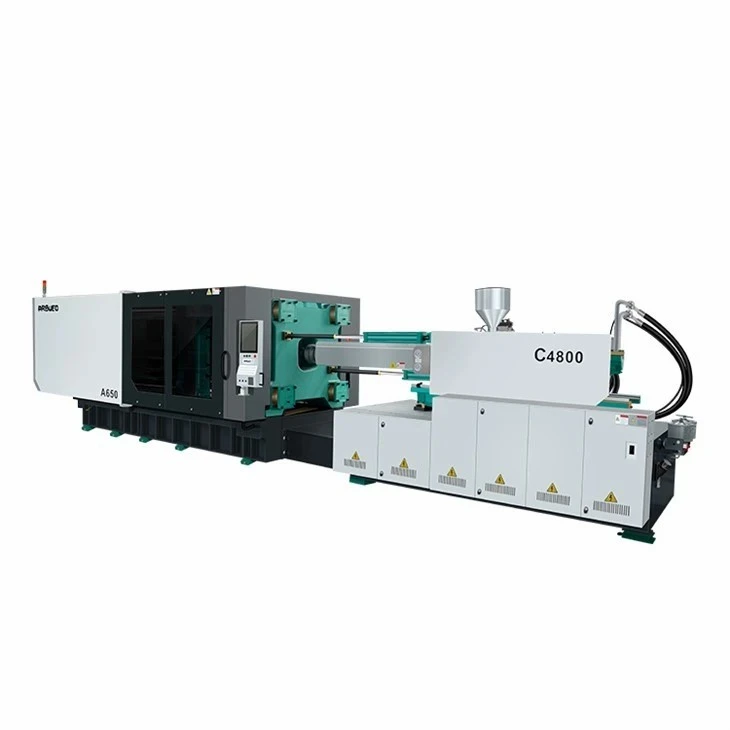
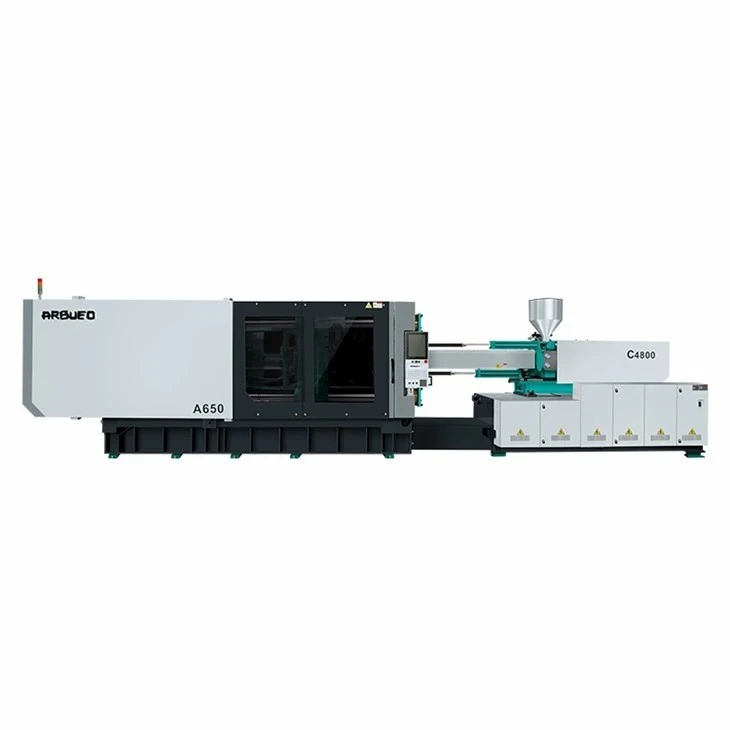
High-Speed Thin-Wall Injection Molding Machine
High-speed thin-wall injection molding requires high injection velocity, rapid hydraulic response times, and maximum mechanical rigidity to fill thin-section molds before the polymer melt freezes. Standard hydraulic injection molding machines often lack the accumulator assist, response speed, and platen stiffness needed for packaging components with wall thicknesses below 0.8 mm.
This high-speed thin-wall injection molding series integrates an accumulator-assisted hydraulic system, servo-electric hybrid drives, and high-rigidity clamping structures. Engineered for high-cavitation packaging molds, medical disposables, and thin-wall containers, this platform delivers injection speeds up to 800 mm/s, dry cycle times under 1.8 seconds, and precision pressure control to prevent flash and short shots.
Key Specifications
Below are the core engineering specifications across our standard high-speed thin-wall platform range. Specific values can be configured based on shot weight, mold dimension, and cycle time requirements.
|
Parameter |
Unit |
Value / Range |
|
Clamping Force |
kN / Ton |
2,600 - 5,500 kN (260T - 550T) |
|
Tie Bar Spacing (H x V) |
mm |
580 x 580 to 880 x 880 |
|
Platen Dimensions (H x V) |
mm |
850 x 850 to 1280 x 1280 |
|
Max. Open Stroke |
mm |
520 - 850 |
|
Mold Height (Min - Max) |
mm |
220 - 600 / 300 - 800 |
|
Injection Speed |
mm/s |
350 - 800 (Accumulator Assisted) |
|
Injection Response Time |
ms |
<= 16 |
|
Screw Diameter |
mm |
38 - 65 (L/D Ratio: 22:1 to 24:1) |
|
Max. Injection Pressure |
bar |
2,000 - 2,400 |
|
Dry Cycle Time (Euromap 6) |
sec |
1.4 - 1.9 |
|
System Drive Type |
- |
Servo-Hydraulic Hybrid + Nitrogen Accumulator |
|
Control System |
- |
KEBA / Techmation High-Speed Controller |
Key Features
Nitrogen Accumulator Injection System: Delivers instant high-volume oil flow to sustain injection speeds up to 800 mm/s under extreme backpressure without pressure drops.
Closed-Loop Servo Control: Real-time position and pressure feedback via high-resolution linear optical scales (0.001 mm resolution) and pressure transducers.
High-Rigidity Box-Frame Platen: Finite Element Analysis (FEA)-optimized platen structure reduces deflection under max tonnage to less than 0.05 mm, protecting multi-cavity molds from uneven wear and parting line flash.
Dual-Cylinder Balanced Injection: Twin injection cylinders maintain alignment during high-speed forward movement, eliminating screw tilt and seal abrasion.
Linear Guide Rails on Injection Unit: Low-friction linear motion guides reduce resistance during high-speed injection, improving injection position repeatability to +/- 0.1 mm.
Independent Hydraulic Circuit Design: Parallel hydraulic circuits enable simultaneous mold open/close, ejector movement, and plasticizing, cutting overall cycle times by 15% - 20%.
Working Principle & Machine Configuration
High-speed thin-wall molding differs significantly from standard molding due to the thermal properties of thin plastics. When molten polymer contacts cold steel in wall thicknesses between 0.35 mm and 0.8 mm, the melt skin freezes within milliseconds. To fill the mold cavity completely, the injection phase must complete in 0.1 to 0.4 seconds under pressures reaching 2,200 bar.
Core Subsystem Configurations
Clamping Unit:
Five-point double toggle kinematic system optimized for rapid opening/closing.
Automatic centralized lubrication system monitoring oil pressure and lubrication frequency at every toggle pin joint.
Differential fast-clamping circuit to lower dry cycle times.
Injection Unit:
Nitrided or bi-metallic screw designed with a barrier profile and dynamic mixing head to handle high-shear homogenization without thermal degradation.
High-response proportional or servo valve controlling oil distribution directly at the injection cylinder inlet.
Non-return valve with a ceramic or wear-resistant alloy ring engineered to prevent backflow under injection accelerations up to 10g.
Hydraulic & Drive Unit:
Permanent magnet servo motor paired with internal gear pumps for energy savings up to 50% compared to fixed-displacement systems.
High-pressure hydraulic accumulators pre-charged with nitrogen gas to supply instantaneous hydraulic energy during filling.
Oil filtration down to 3 microns with integrated oil cooler and real-time oil temperature/level monitoring.
Product-Specific Technical Advantages
Ultra-Short Injection Response Time (<= 16 ms)
Standard hydraulic valves require 40 - 80 ms to transition from neutral to fully open. This unit uses high-response Moog/Rexroth servo valves combined with close-coupled accumulator manifolds, achieving target velocity within 16 ms. This prevents melt pre-shearing and dynamic pressure spikes.
Reduced Platen Deflection Under High Tonnage
Uneven clamping force distribution causes flash on center cavities in high-cavitation tools (e.g., 32-cavity or 48-cavity food containers). The box-type platen layout directs clamping forces directly behind the mold mounting area, maintaining mold face parallelism under full clamping load.
Plasticizing Thermal Stability
High screw rotation speeds can generate excessive frictional heat, burning sensitive materials like Polypropylene (PP) or Polystyrene (PS). The specialized barrier screw geometry balances mechanical shear and thermal conduction, maintaining melt temperature variation within +/- 1.5 deg C across continuous 24/7 runs.
Typical Applications
This machine platform supports high-volume manufacturing across sectors demanding high precision, zero defect rates, and rapid continuous operation:
Thin-Wall Food Packaging:
Round and rectangular deli containers (0.4 mm - 0.6 mm wall thickness)
In-Mold Labeling (IML) yogurt cups, ice cream tubs, and margarine containers
Tamper-evident beverage caps and closures
Medical Disposables:
Pipette tips (multi-cavity high-precision tooling)
Syringe barrels and plunger rods
Centrifuge tubes and test cuvettes
Consumer Goods & Electronics:
Disposable cutlery (knives, forks, spoons with short cycle times under 3.5s)
Mobile phone internal frame brackets and battery housings
Light guide plates and optical display frames
Material Compatibility
Thin-wall injection molding demands resins with high Melt Flow Index (MFI) values to facilitate fast flow through narrow cavity channels:
Polypropylene (PP): Injection grade MFI 30 - 100 g/10 min. Primary resin for food containers, IML packaging, and caps.
Polystyrene (GPPS / HIPS): High-flow grades for transparent thin-wall cups, cutlery, and rigid packaging.
Polyethylene (HDPE / LLDPE): Used for flexible closures, caps, and thin-wall industrial pails.
Polycarbonate (PC) / ABS Blends: Applied in thin-wall electronic housings requiring flame retardancy and high impact strength.
Polyethylene Terephthalate (PET): Specialized thin-wall preforms and specialized packaging applications.
How to Select / Configuration Options
Selecting the correct machine sizing requires evaluating shot volume, projected area, wall thickness, and mold design:
Clamping Force Sizing Formula
Clamping Force (Tons) = [Projected Area of Parts + Runners (cm^2) x Cavity Pressure (bar)] / 1000 x Safety Factor (1.1 - 1.2)
Recommended Configuration Matrix
|
Component / Requirement |
Standard Packaging |
High-Precision Medical |
IML Integrated Line |
|
Injection Speed |
500 - 600 mm/s |
400 - 500 mm/s |
600 - 800 mm/s |
|
Screw Type |
Bi-metallic nitrided |
Stainless steel / Chrome plated |
High-flow PP barrier screw |
|
Cleanroom Readiness |
Standard industrial |
ISO Class 7/8 compatible |
Enclosed clamping area |
|
Automation Interface |
Euromap 67 / SPI |
Euromap 67 / SPI |
Euromap 73 / High-speed IML signal |
|
Accumulators |
Single / Twin cylinder |
Twin cylinder precision controlled |
Multi-station high-capacity accumulator |
Manufacturing & Quality Control
Every machine undergoes strict structural, machining, and operational verifications prior to shipment:
[Raw Casting Inspection] ---> [CNC Machining & Stress Relief] ---> [CMM Alignment Verification]
|
[Factory Acceptance Testing (FAT)] <--- [72-Hour Continuous Run] <--- [Assembly & Laser Calibration]
Casting & Stress Relieving: Machine frames and platens use ductile iron castings (QT450-10) subjected to natural and thermal stress-relief aging to eliminate internal stress and prevent long-term deformation.
Precision Machining: Platen surfaces and tie-bar guide holes are machined on 5-axis CNC portal machining centers in a temperature-controlled environment.
Laser Interferometer Alignment: Tie bar parallelism and platen flatness are verified using Renishaw laser interferometers to ensure accuracy within 0.03 mm.
72-Hour Load Testing: Assembled machines execute a 72-hour continuous dry-cycle and pressure-hold test monitoring oil temperature, vibration levels, and hydraulic stability before factory clearance.
Customization & OEM Support
To support specific production line requirements and factory automation standards, we offer technical customization options:
Barrel Heating Options: Ceramic heater bands, infrared energy-saving heating covers, or induction heating systems for rapid thermal response.
Extended Mold Opening Stroke: Modified toggle kinematics for deep-draw thin-wall containers or tall IML products.
Specialized Screw Geometries: Customized L/D ratios and flights engineered for bio-resins (PLA), high-filled compounds, or PCR (post-consumer recycled) blends.
Integrated Hydraulic Core Pulls: Programmable sequential core-pulling circuits integrated directly into the machine PLC.
Custom Color & Brand Labeling: Color matching to customer factory standards and OEM private labeling for regional equipment distributors.
What Buyers Should Provide for a Quote
To receive an accurate technical proposal, mold matching evaluation, and commercial quotation, please share the following project parameters:
Part Drawings: 2D/3D files (STEP, IGES, or PDF) indicating critical dimensions and minimum wall thickness.
Resin Specification: Specific polymer grade, brand, and Melt Flow Index (MFI/MFR).
Mold Details:
Number of cavities
Mold dimensions (Length x Width x Height) and weight
Hot runner system type (valve gate or open sprue) and electrical gate control requirements
Target Output / Cycle Time: Expected daily production quantity or required dry cycle target.
Automation Requirements: Interface needs for In-Mold Labeling (IML) robots, side-entry take-out arms, or downstream packaging machinery.
FAQ
Q: How does accumulator-assisted injection improve thin-wall molding success rates?
A: Accumulators store hydraulic energy during the cooling and plasticizing phases and release it instantly during injection. This provides the extremely high flow rate needed to fill thin cavities within fractions of a second before the polymer freezes, preventing short shots and structural stress.
Q: Can this machine run standard-wall parts or general injection molds?
A: Yes. The control system allows operators to disable accumulator assist or lower injection speeds via the HMI screen. However, for standard thick-walled parts where cycle times are dominated by long cooling phases, a standard servo-hydraulic machine is generally more cost-effective.
Q: What maintenance routine is required for high-speed operation?
A: High-speed operation increases wear on mechanical joints and hydraulic seals. Maintenance includes checking automatic lubrication oil levels daily, verifying hydraulic oil cleanliness (NAS Class 7 or better) every 3 to 6 months, checking nitrogen accumulator charge pressure every 6 months, and inspecting toggle bushings annually.
Q: Is the controller compatible with Industry 4.0 and factory MES systems?
A: Yes. The controller supports OPC-UA and Euromap 63/77 communication protocols. Real-time parameters-including cycle times, injection pressure curves, temperature profiles, and alarm histories-can be exported directly to your central execution system.
Hot Tags: high speed thin wall injection molding machine, China high speed thin wall injection molding machine manufacturers, suppliers, factory


