


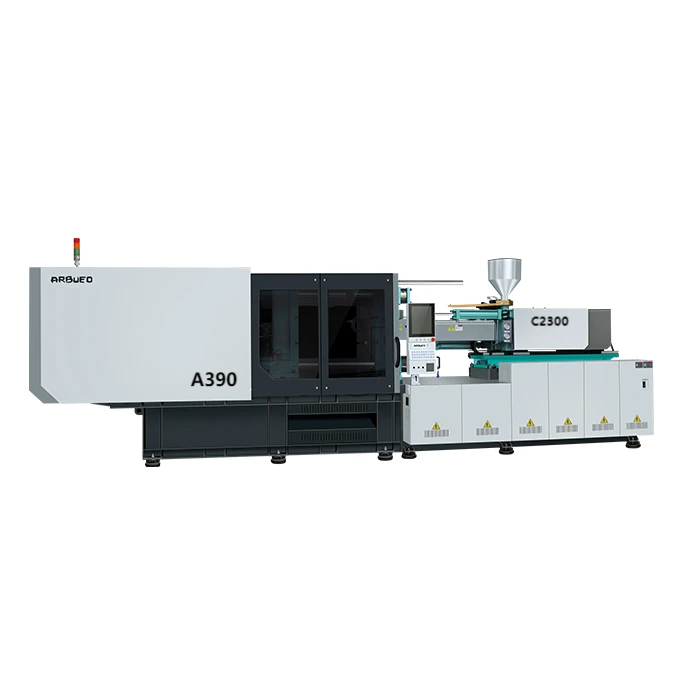
The production capacity of a Hybrid Injection Moulding Machine is a critical aspect that businesses in the plastic manufacturing industry need to understand thoroughly. As a supplier of Hybrid Injection Moulding Machines, I've witnessed firsthand how the right machine can revolutionize a production line. In this blog, we'll explore what production capacity means in the context of these machines, the factors that influence it, and how it compares to other types of injection moulding machines.
Defining Production Capacity
Production capacity refers to the maximum amount of products a Hybrid Injection Moulding Machine can produce within a given time frame. This metric is typically measured in terms of the number of parts produced per hour, day, or month. However, it's not just about quantity; quality also plays a significant role. A machine with high production capacity should be able to maintain consistent quality across all produced parts.
For instance, if a Hybrid Injection Moulding Machine is set to produce small plastic components for electronic devices, its production capacity would be determined by how many of these components it can produce in an hour while meeting the required specifications for size, shape, and material properties.
Factors Influencing Production Capacity
Injection Speed
One of the primary factors affecting the production capacity of a Hybrid Injection Moulding Machine is its injection speed. The injection speed refers to how quickly the machine can inject the molten plastic into the mould cavity. A higher injection speed means that the machine can fill the mould faster, reducing the cycle time between each production run.
Modern Hybrid Injection Moulding Machines are designed with advanced hydraulic and electric systems that allow for precise control of the injection speed. This not only increases production capacity but also ensures that the plastic is evenly distributed within the mould, resulting in high - quality parts.
Clamping Force
Clamping force is another crucial factor. It is the force applied by the machine to keep the mould closed during the injection process. A sufficient clamping force is necessary to prevent the molten plastic from leaking out of the mould.
If the clamping force is too low, the plastic may flash or seep out of the mould, leading to defective parts and increased production time for rework. On the other hand, a machine with a high clamping force can handle larger and more complex moulds, enabling the production of bigger parts or multiple parts in a single cycle, thereby increasing the overall production capacity.

Mould Design
The design of the mould used in the Hybrid Injection Moulding Machine also has a significant impact on production capacity. A well - designed mould can reduce the cycle time by allowing for faster cooling and ejection of the parts. For example, a mould with an efficient cooling system can cool the plastic parts more quickly, reducing the time it takes for them to solidify and be ejected from the mould.
Additionally, multi - cavity moulds can produce multiple parts simultaneously, significantly increasing the production capacity of the machine. However, designing and manufacturing such moulds require expertise and precision to ensure that each cavity produces high - quality parts.
Comparing with Other Injection Moulding Machines
Hybrid vs. Hydraulic Plastic Injection Moulding Machine
Hydraulic Plastic Injection Moulding Machine have been a staple in the industry for a long time. They use hydraulic systems to generate the clamping force and drive the injection process. While they are known for their high power and ability to handle large - scale production, they often have longer cycle times and higher energy consumption compared to Hybrid Injection Moulding Machines.
Hybrid machines combine the best of hydraulic and electric technologies. They use hydraulic power for high - force applications such as clamping, while the injection process is often driven by electric motors. This combination allows for faster cycle times, better energy efficiency, and more precise control, resulting in a higher production capacity.

Hybrid vs. Hydraulic Clamping Injection Molding Machine
Hydraulic Clamping Injection Molding Machine rely solely on hydraulic systems for both clamping and injection. These machines are suitable for applications where high clamping forces are required, but they may lack the precision and speed of Hybrid Injection Moulding Machines.
Hybrid machines offer a more balanced approach. They can provide the necessary clamping force while also leveraging the benefits of electric drives for injection, which can lead to shorter cycle times and increased production capacity.
Optimizing Production Capacity
To maximize the production capacity of a Hybrid Injection Moulding Machine, several strategies can be employed. Regular maintenance is essential to ensure that all components of the machine are functioning properly. This includes checking the hydraulic system, electric motors, and mould for any signs of wear or damage.
Proper training of operators is also crucial. Skilled operators can optimize the machine settings, such as injection speed and clamping force, based on the specific requirements of each production run. They can also identify and troubleshoot any issues that may arise during the production process, minimizing downtime.

Furthermore, using high - quality raw materials can improve the performance of the machine. High - grade plastics melt more uniformly and flow better, reducing the risk of blockages and defects in the parts.
Conclusion
The production capacity of a Hybrid Injection Moulding Machine is a complex metric that is influenced by various factors such as injection speed, clamping force, and mould design. Compared to traditional hydraulic machines, Hybrid Injection Moulding Machines offer significant advantages in terms of cycle time, energy efficiency, and precision, resulting in higher production capacity.
If you're in the plastic manufacturing industry and looking to enhance your production capabilities, a Hybrid Injection Moulding Machine could be the solution. We are here to provide you with the best machines and support to meet your production needs. Contact us to discuss your requirements and explore how our Hybrid Injection Moulding Machines can transform your production line.
References
- “Injection Molding Handbook” by O. Olsson and J. Menges
- “Plastic Injection Molding: Science and Technology” by John Beaumont