


Hey there! As a supplier of Tabletop Injection Molding Machines, I often get asked about the noise levels of these nifty little machines. So, I thought I'd take a deep dive into this topic and share some insights with you.
First off, let's understand why noise levels matter. In a workshop or a small production setup, excessive noise can be a real pain. It can not only be annoying for the operators but also pose a risk to their hearing over time. Moreover, if you're running a business from a residential area or a shared workspace, high noise levels can lead to complaints from neighbors. So, having a good understanding of the noise levels of a tabletop injection molding machine is crucial.
Factors Affecting Noise Levels
There are several factors that can influence the noise levels of a tabletop injection molding machine. One of the main factors is the type of motor used. Most tabletop injection molding machines are powered by electric motors. Different motors have different noise profiles. For instance, a brushed DC motor might produce more noise compared to a brushless DC motor. The reason is that the brushes in a brushed DC motor create friction and electrical arcing, which can generate additional noise.
Another factor is the mechanical design of the machine. The moving parts, such as the screw, the clamping mechanism, and the ejector system, can all contribute to the overall noise. If these parts are not well-lubricated or if there is excessive play in the joints, it can result in rattling and banging noises. Also, the way the machine is assembled can make a difference. A poorly assembled machine might have loose components that vibrate and produce noise during operation.
The material being injected can also play a role in the noise levels. Some plastics are more viscous than others, and injecting a highly viscous plastic requires more force from the machine. This can put additional stress on the motor and the mechanical components, leading to increased noise.
Typical Noise Levels
On average, a tabletop injection molding machine can produce noise levels ranging from 60 to 80 decibels (dB). To put this into perspective, normal conversation typically ranges from 50 to 60 dB, while a vacuum cleaner can produce around 70 to 80 dB. So, the noise level of a tabletop injection molding machine is comparable to that of a vacuum cleaner.
However, it's important to note that these are just general estimates. The actual noise level can vary depending on the factors mentioned above. For example, a well-designed machine with a high-quality brushless motor and proper lubrication might produce noise levels closer to the lower end of the range, while a machine with a noisy motor and loose components could produce noise levels closer to the upper end.
Measuring Noise Levels
If you're interested in knowing the exact noise level of a tabletop injection molding machine, you can use a sound level meter. These meters are relatively inexpensive and easy to use. Simply place the meter at a distance of about 1 meter from the machine and turn on the machine. The meter will display the noise level in decibels.
It's also a good idea to measure the noise level at different points around the machine, as the noise might be louder in some areas than others. Additionally, you can measure the noise level at different stages of the injection molding process, such as during the injection phase, the clamping phase, and the ejection phase, to get a more comprehensive understanding of the machine's noise profile.

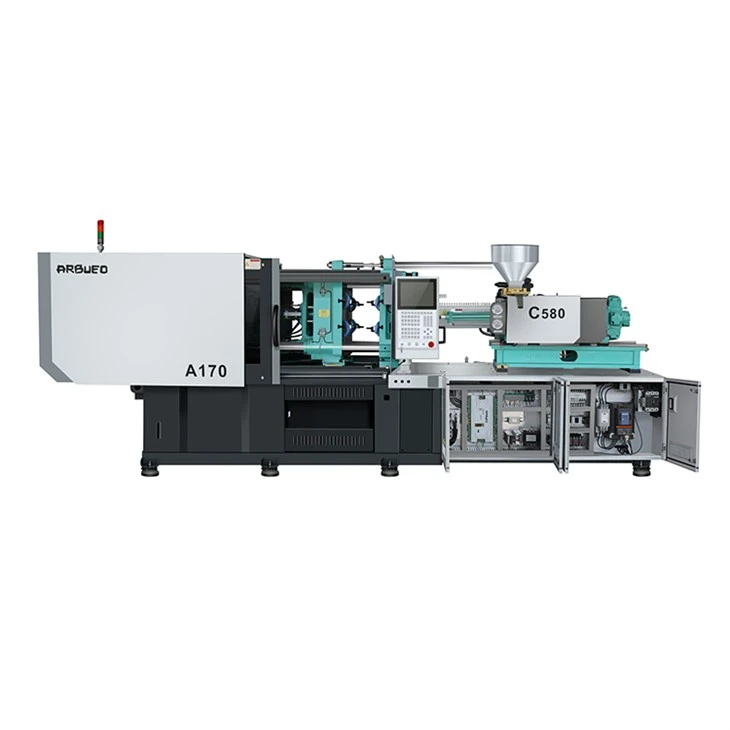
Reducing Noise Levels
If you find that the noise level of your tabletop injection molding machine is too high, there are several steps you can take to reduce it. One of the simplest things you can do is to ensure that the machine is properly maintained. This includes regular lubrication of the moving parts, tightening of loose bolts and screws, and checking for any signs of wear and tear.
Another option is to use noise-reducing materials. You can line the inside of the machine's enclosure with sound-absorbing materials, such as acoustic foam or fiberglass insulation. This can help to dampen the noise and prevent it from escaping the machine.
You can also consider using a vibration isolation pad. These pads are designed to absorb the vibrations produced by the machine and prevent them from being transmitted to the surrounding surface. This can reduce the amount of noise that is generated by the machine's vibrations.
Our Tabletop Injection Molding Machines
At our company, we take noise levels seriously. We understand that a quiet machine is not only more pleasant to work with but also more suitable for various environments. That's why we use high-quality brushless DC motors in our Tabletop Injection Molding Machines. These motors are not only more energy-efficient but also produce less noise compared to traditional brushed DC motors.
In addition, we pay close attention to the mechanical design of our machines. We use precision-machined components and ensure that they are properly assembled and lubricated. This helps to minimize the amount of noise generated by the moving parts.
We also offer optional noise-reducing features, such as acoustic enclosures and vibration isolation pads, to further reduce the noise levels of our machines.
Other Injection Molding Machines
Apart from our tabletop injection molding machines, we also offer Plastic Pallet Injection Molding Machines. These machines are designed for larger-scale production and are built to handle the high demands of plastic pallet manufacturing.
We also have a Plastic Pallet Injection Molding Factory where we produce high-quality plastic pallets using our state-of-the-art injection molding technology.
Contact Us for Purchase
If you're interested in purchasing a tabletop injection molding machine or any of our other injection molding products, we'd love to hear from you. Whether you're a small business owner looking to start a new project or a large manufacturer in need of an upgrade, we have the right machine for you. Just reach out to us, and our team of experts will be happy to assist you with your purchase and answer any questions you might have.
References
- "Noise Control Engineering: Principles and Applications" by L. L. Beranek and I. L. Ver.
- "Injection Molding Handbook" by O. Olanipekun.