


Calculating the production cost of toys using a toy injection molding machine is a crucial step for toy manufacturers aiming to optimize their operations and maximize profitability. As a leading Toy Injection Molding Machine supplier, I understand the complexities involved in this process and am here to guide you through the key factors and steps to accurately estimate production costs.
1. Understanding the Basics of Toy Injection Molding
Toy injection molding is a manufacturing process in which molten plastic is injected into a mold cavity under high pressure. Once the plastic cools and solidifies, the mold is opened, and the finished toy is ejected. This process is highly efficient and can produce a large number of identical toys with high precision and quality.
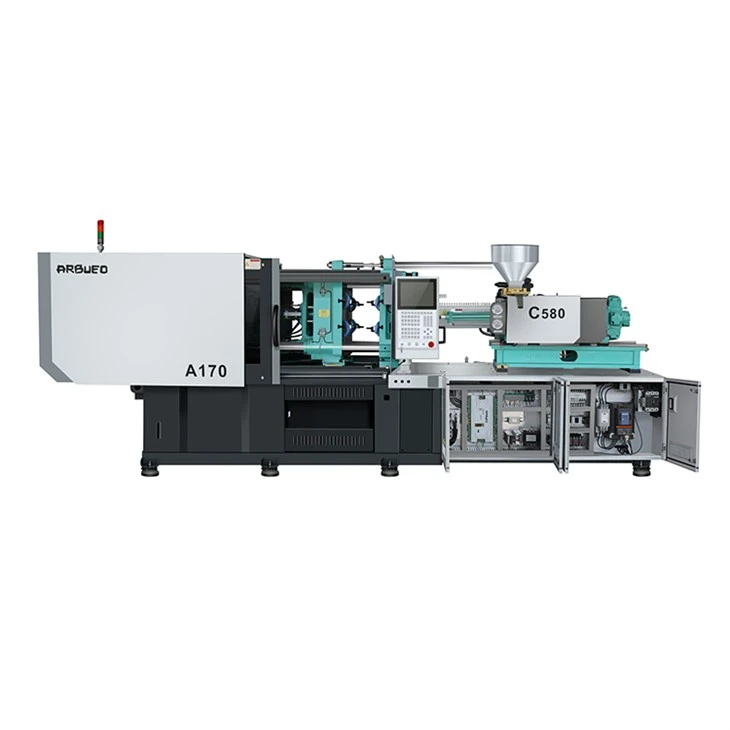
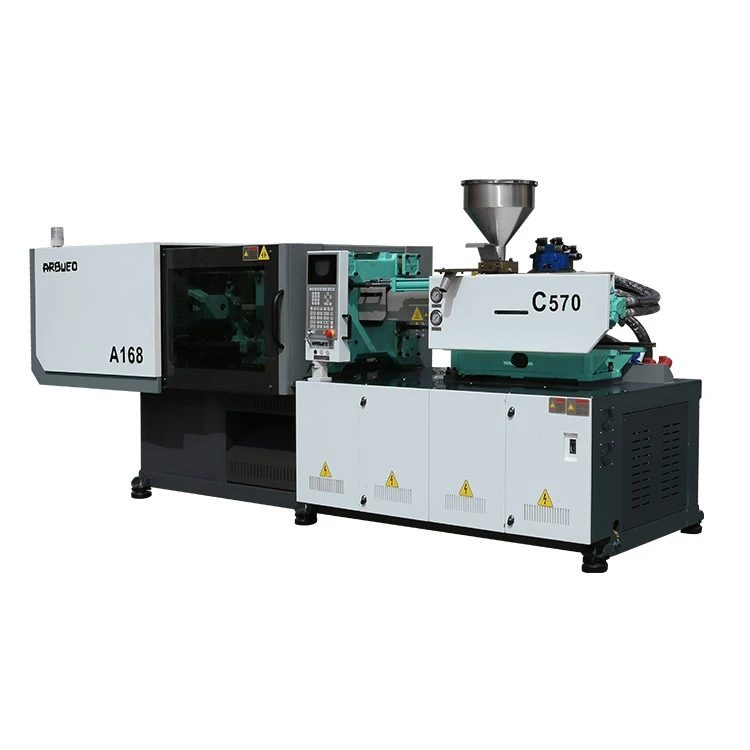
There are different types of injection molding machines available, each with its own features and capabilities. For example, the Tabletop Injection Molding Machine is suitable for small - scale production or prototyping, while the Automatic Servo Injection Molding Machine offers high - speed and high - precision operation, and the High Speed Injection Molding Machine is ideal for large - volume production.
2. Identifying the Key Cost Components
2.1 Machine Purchase and Depreciation
The first major cost is the purchase price of the injection molding machine. The cost can vary significantly depending on the type, size, and features of the machine. For instance, a basic tabletop machine may cost a few thousand dollars, while a high - end automatic servo or high - speed machine can cost tens or even hundreds of thousands of dollars.
To calculate the cost related to the machine, you need to consider its depreciation. Depreciation is the decrease in the value of the machine over time. A common method to calculate depreciation is the straight - line method. The formula for straight - line depreciation is:
[Depreciation\ per\ year=\frac{Purchase\ price - Salvage\ value}{Useful\ life}]
where the salvage value is the estimated value of the machine at the end of its useful life, and the useful life is the number of years the machine is expected to be in service.
2.2 Mold Cost
The mold is a critical part of the injection molding process. It is custom - designed to create the specific shape of the toy. The cost of a mold depends on its complexity, size, and the material used. A simple mold may cost a few hundred dollars, while a complex multi - cavity mold for a large toy can cost several thousand dollars.
Similar to the machine, the mold also has a limited lifespan. You need to spread the mold cost over the number of toys produced. The mold cost per toy is calculated as:
[Mold\ cost\ per\ toy=\frac{Mold\ cost}{Expected\ number\ of\ toys\ produced\ by\ the\ mold}]
2.3 Raw Material Cost
The raw material for toy injection molding is usually plastic pellets. The cost of raw materials depends on the type of plastic, market prices, and the quantity purchased. Common plastics used in toy production include polyethylene (PE), polypropylene (PP), and acrylonitrile butadiene styrene (ABS).
To calculate the raw material cost per toy, you need to know the weight of the plastic required for each toy and the price per unit weight of the plastic. The formula is:
[Raw\ material\ cost\ per\ toy = Weight\ of\ plastic\ per\ toy\times Price\ per\ unit\ weight\ of\ plastic]
2.4 Labor Cost
Labor cost includes the wages of the workers involved in the injection molding process, such as machine operators, quality control inspectors, and maintenance staff. To calculate the labor cost per toy, you first need to determine the total labor cost per hour and the number of toys produced per hour.
[Labor\ cost\ per\ toy=\frac{Total\ labor\ cost\ per\ hour}{Number\ of\ toys\ produced\ per\ hour}]
2.5 Energy Cost
Injection molding machines consume a significant amount of energy, mainly for heating the plastic and operating the hydraulic or electric systems. The energy cost depends on the power consumption of the machine, the local electricity rate, and the operating time.
[Energy\ cost\ per\ toy=\frac{Total\ energy\ cost\ per\ hour}{Number\ of\ toys\ produced\ per\ hour}]
2.6 Maintenance and Repair Cost
Regular maintenance and occasional repairs are necessary to keep the injection molding machine and molds in good working condition. The maintenance and repair cost includes the cost of spare parts, lubricants, and the labor cost for maintenance workers. This cost can be estimated based on historical data or the manufacturer's recommendations. Similar to other costs, it is calculated per toy:
[Maintenance\ and\ repair\ cost\ per\ toy=\frac{Total\ maintenance\ and\ repair\ cost\ per\ period}{Number\ of\ toys\ produced\ in\ the\ same\ period}]
3. Step - by - Step Calculation Example
Let's assume we want to produce a small plastic toy using an automatic servo injection molding machine.
-
Machine and Mold Cost:
- The automatic servo injection molding machine costs $50,000, with a salvage value of $5,000 and a useful life of 10 years. Using the straight - line depreciation formula, the annual depreciation is (\frac{50000 - 5000}{10}=4500) dollars. If the machine operates 250 days a year and produces 100 toys per day, the machine depreciation cost per toy is (\frac{4500}{250\times100}=0.18) dollars.
- The mold for the toy costs $2000, and it is expected to produce 10,000 toys. The mold cost per toy is (\frac{2000}{10000}=0.2) dollars.
-
Raw Material Cost:
- The toy requires 50 grams of ABS plastic. The price of ABS plastic is $2 per kilogram. The raw material cost per toy is (50\div1000\times2 = 0.1) dollars.
-
Labor Cost:
- The total labor cost per hour is $20, and the machine produces 100 toys per hour. The labor cost per toy is (\frac{20}{100}=0.2) dollars.
-
Energy Cost:
- The machine consumes 5 kilowatt - hours of electricity per hour, and the electricity rate is $0.15 per kilowatt - hour. The energy cost per hour is (5\times0.15 = 0.75) dollars. The energy cost per toy is (\frac{0.75}{100}=0.0075) dollars.
-
Maintenance and Repair Cost:
- The estimated annual maintenance and repair cost is $1000. Using the same production volume as above, the maintenance and repair cost per toy is (\frac{1000}{250\times100}=0.04) dollars.
The total production cost per toy is the sum of all these costs: (0.18+0.2 + 0.1+0.2+0.0075 + 0.04=0.7275) dollars.
4. Tips for Cost Optimization
- Volume Production: Increasing the production volume can reduce the machine depreciation and mold cost per toy.
- Raw Material Selection: Choose the appropriate plastic based on the toy's requirements to balance quality and cost. Buying raw materials in bulk can also get better prices.
- Machine Efficiency: Regular maintenance and proper operation of the machine can improve its efficiency, reduce energy consumption, and lower the maintenance cost.
5. Conclusion
Calculating the production cost of toys using a toy injection molding machine is a comprehensive process that involves considering multiple cost components. By accurately estimating these costs, toy manufacturers can make informed decisions about pricing, production volume, and cost - saving measures.
As a Toy Injection Molding Machine supplier, we are committed to providing high - quality machines and comprehensive support to help you optimize your production costs. If you are interested in learning more about our products or need assistance in calculating your production costs, please feel free to contact us for further discussion and potential procurement.
References
- Campbell, F. C. (2012). Manufacturing Engineering & Technology. Pearson.
- Rosato, D. V., & Rosato, D. V. (2000). Injection Molding Handbook. Kluwer Academic Publishers.